Category: AI-assisted summary

This category contains posts where the content was generated primarily using A.I. but reviewed and edited by Jesper Andersen.

  • The Global Risks Report 2025 by World Economic Forum

    The Global Risks Report 2025 by World Economic Forum

    About the paper

    The Global Risks Report 2025 is the World Economic Forum’s 20th annual assessment of major global risks across geopolitical, environmental, societal, economic and technological domains.

    It is a mixed-methods report based primarily on the 2024–2025 Global Risks Perception Survey of over 900 experts worldwide, collected from 2 September to 18 October 2024, supplemented by the Executive Opinion Survey of over 11,000 business leaders in 121 economies and qualitative input from 96 experts.

    The geographic scope is global.

    Length: 104 pages

    More information / download:
    https://www.weforum.org/publications/global-risks-report-2025/

    Core Insights

    1. What is the report’s central argument about the global risk landscape in 2025?

    The report argues that the world is entering 2025 in a state of deepening fragmentation, with risks increasingly reinforcing one another across domains. Its central diagnosis is that geopolitical conflict, societal polarization, environmental stress and technological disruption are converging in ways that existing governance systems are poorly equipped to manage.

    The immediate risk that dominates the 2025 outlook is state-based armed conflict, selected by 23% of GRPS respondents as the risk most likely to present a material global crisis in 2025. This is a major shift from the previous year, when it ranked eighth. The report connects this rise to the wars in Ukraine, the Middle East and Sudan, and to broader fears that conflicts could escalate or spread.

    But the report does not present conflict as an isolated geopolitical problem. It describes a risk environment where conflict is linked to geo-economic confrontation, cyber warfare, misinformation and disinformation, forced displacement, humanitarian crises and weakening multilateralism. In other words, the world is not only experiencing more crises; it is losing some of the connective tissue needed to manage them collectively.

    The tone is notably pessimistic. Only a small share of respondents see the near-term outlook as stable or calm, while a majority expect an “unsettled” world and sizeable minorities expect turbulence or stormy conditions. The report’s broader message is that short-term crisis management is no longer enough because many immediate risks are symptoms of deeper structural shifts.

    2. Which risks dominate the short-term outlook to 2027, and why?

    The top risk over the two-year horizon is misinformation and disinformation, which ranks first for the second year running. The report sees this as especially dangerous because false or misleading content now interacts with political polarization, conflict, elections, distrust in institutions and advances in generative AI.

    The short-term top risks also include extreme weather events, societal polarization, cyber espionage and warfare, state-based armed conflict, inequality, involuntary migration or displacement, erosion of human rights and civic freedoms, geo-economic confrontation and pollution.

    Several patterns stand out. First, geopolitical risks have moved sharply upward. State-based armed conflict is now third over the two-year horizon, and geo-economic confrontation has risen from fourteenth to ninth. Second, economic risks such as inflation and economic downturn have fallen out of the two-year top 10, even though the report warns against complacency. Third, societal risks remain highly prominent, suggesting that social cohesion is becoming a central risk variable rather than merely a consequence of other crises.

    The report’s short-term outlook is therefore not just a list of threats; it is a picture of a world where trust is weakening. Misinformation undermines shared reality, polarization reduces the capacity for collective action, and geopolitical rivalry makes international cooperation harder just when it is most needed.

    3. How does the report describe the longer-term risk outlook to 2035?

    The 2035 outlook is even darker than the short-term outlook. The report finds that all 33 risks assessed in the GRPS are expected to increase in severity over the 10-year horizon compared with the two-year horizon. Environmental and technological risks become much more prominent over the longer term.

    The highest-ranked long-term risk is extreme weather events, followed by critical change to Earth systems, biodiversity loss and ecosystem collapse, natural resource shortages and misinformation and disinformation. This means that four of the top five long-term risks are environmental.

    The report presents environmental risk as having moved from a distant long-term concern to an urgent, worsening reality. Extreme weather remains the top 10-year risk for the second year in a row, while biodiversity loss and Earth system change are framed as signs that the world may be approaching irreversible thresholds.

    Technological risks also rise sharply over the decade. Adverse outcomes of AI technologies ranks only low in the two-year outlook but climbs to sixth in the 10-year ranking. The report treats this as a warning against complacency: current risk perception may be underestimating how quickly AI, biotechnology and other frontier technologies could reshape social, political and security risks.

    The 2035 message is that the world faces a compounding risk landscape: climate stress, technological acceleration, demographic change and geostrategic fragmentation are not separate trends, but structural forces that interact.

    4. What role do technology, misinformation and polarization play in the report’s risk narrative?

    Technology is treated as both an accelerator and an amplifier of risk. The report does not argue that technology itself is the root cause of fragmentation, but it shows how digital platforms, generative AI, algorithmic systems and expanding surveillance capabilities can intensify existing social and political divisions.

    The most immediate concern is misinformation and disinformation. The report notes that generative AI makes it easier to produce false or misleading text, images, audio and video at scale. This makes it harder for citizens, companies and governments to distinguish reliable information from manipulated content.

    The report links this directly to societal polarization, which ranks fourth over the two-year horizon. Polarized societies are more vulnerable to manipulated narratives, and manipulated narratives can in turn deepen polarization. The risk is a feedback loop in which trust in media, institutions and public information continues to erode.

    The report also highlights algorithmic bias and censorship and surveillance. As public services, media systems and political communication become more data-driven, biased or opaque algorithms can produce unfair outcomes and further reduce trust. Meanwhile, the growing digital footprint of citizens gives governments, companies and threat actors greater capacity to monitor and influence behaviour.

    The report’s underlying assumption is that technological governance is lagging behind technological capability. It calls for stronger accountability, transparency, digital literacy and upskilling for those building and using automated systems.

    5. What does the report imply for global governance and risk preparedness?

    The report’s strongest implication is that fragmented governance is becoming a risk multiplier. Across conflict, trade, technology, pollution, biotech and demographic ageing, the report repeatedly returns to the same problem: many of the most severe risks require collective action, but the international environment is becoming less cooperative.

    For armed conflict, the report argues that weakened faith in multilateral institutions could push governments towards unilateral action and selective alliances. For geo-economic confrontation, it warns that escalating tariffs, sanctions and investment restrictions could fragment global trade and weaken cooperation on climate, health, technology and development. For pollution and biotech, it stresses the need for better regulation, monitoring and global norms.

    The report does not suggest that global treaties alone are sufficient. It also emphasizes regional organizations, multi-stakeholder engagement, domestic resilience, public education, corporate strategies, research and development, and better monitoring systems. But its broader conclusion is that durable risk mitigation depends on rebuilding forms of cooperation that can survive geopolitical rivalry.

    The final message is cautiously normative: the world is moving into a more divided and unstable period, but the report insists there is no viable alternative to dialogue, collaboration and multilateral solutions. Its purpose is therefore not simply to forecast risk, but to push leaders to act before today’s warning signals become irreversible crises.

  • Journalism and Technology Trends and Predictions 2025 by Reuters

    Journalism and Technology Trends and Predictions 2025 by Reuters

    About the paper

    The report examines the pressures, priorities, and strategic bets shaping journalism in 2025, with a particular focus on platform disruption, AI, product innovation, and the changing relationship between publishers and audiences.

    It is based primarily on original survey research with 326 senior media leaders from 51 countries and territories, fielded online between 20 November and 20 December 2024, and supplemented by background interviews and industry examples. The geographic scope is global, though the report notes that respondents were concentrated in the UK, US, and Europe.

    Length: 47 pages

    More information / download:
    https://reutersinstitute.politics.ox.ac.uk/journalism-media-and-technology-trends-and-predictions-2025

    Core Insights

    1. What does the report identify as the central challenge facing journalism in 2025?

    The report argues that journalism is under pressure from several directions at once: hostile politics, economic strain, weakening platform relationships, and the rise of AI-driven intermediaries that may displace publishers in the discovery chain. Its core claim is not that journalism is disappearing, but that institutional journalism is being forced to redefine its value in a far more contested information environment. Publishers face attacks from populist politicians, a growing creator-led alternative media ecosystem, and a technology landscape in which search, social, and conversational interfaces are all shifting against them.

    A key tension in the report is the contrast between low confidence in journalism as a sector and higher confidence in individual companies’ prospects. Only 41% of surveyed leaders say they are confident about journalism’s prospects in the year ahead, while 56% are confident about their own company’s business prospects. That gap suggests leaders believe the wider institution is weakening even while some organisations think they can adapt and survive.

    The report’s underlying perspective is that journalism’s challenge is no longer just commercial. It is also structural and civic. Publishers are losing control over distribution, are being bypassed by politicians and creators, and may increasingly find their reporting summarised or repackaged by AI systems before audiences ever reach the original source. The report therefore frames 2025 as a year in which journalism must fight for visibility, authority, and economic leverage all at once.

    2. How does the report describe the impact of platform change and search disruption on publishers?

    The report presents search disruption as one of the most serious emerging threats to news publishers. After major declines in referral traffic from Facebook and X, publishers are now worried that search could be next as AI overviews and conversational search products replace traditional link-based discovery. The report cites Chartbeat data showing Facebook referrals to news sites down 67% over two years and X down 50%, while aggregate Google search traffic had not yet fallen overall at the time of writing. Even so, 74% of respondents say they are worried about possible declines in referral traffic from search engines in 2025.

    The concern is not just fewer clicks. It is that AI products increasingly look like replacements for publisher interfaces rather than gateways to them. The report points to ChatGPT Search, Perplexity, Particle, Grok Stories, and other automated news interfaces that summarise multiple sources and foreground the platform’s answer over the publisher’s full article. That changes the economics of discovery. A publisher may still be cited, but citations are not equivalent to traffic, habit, subscriptions, or control of the audience relationship.

    This leads to a second issue: compensation and bargaining power. The report notes that some major publishers have secured licensing deals with AI companies, but these arrangements are uneven and opaque. Nearly three-quarters of respondents, 72%, say the industry should push for collective agreements rather than company-by-company deals. The report therefore treats AI licensing not as a settled revenue opportunity, but as a contested and potentially unequal new layer in the publisher-platform relationship.

    3. What strategic responses are publishers prioritising to adapt their business models?

    The report shows publishers leaning harder into reader revenue, product diversification, and direct relationships. Subscription and membership remain the most important revenue focus, cited by 77% of commercial publishers, ahead of display advertising at 69% and native advertising at 59%. But the report also emphasises that most companies are now combining several revenue streams, including events, platform funding, e-commerce, philanthropy, donations, and related businesses.

    A major theme is that strengthening the core product is no longer seen as sufficient on its own. While 55% still say strengthening the existing product is the main priority, 44% say developing new products and services will be most important for future growth. Publishers are exploring youth products, audio, video, education, games, food, international editions, and bundled offerings. The report presents this as a strategic shift from a narrow news product to a broader portfolio model, influenced especially by the New York Times example.

    The report also suggests that bundling may become more important as a retention strategy. Publishers are looking to combine news with adjacent services and lifestyle products in all-access subscriptions, both to reduce churn and to compete in a crowded subscription market. This reflects a larger assumption in the report: that publishers will need stronger owned-and-operated ecosystems because platform-dependent growth is becoming less reliable.

    4. What role does generative AI play in newsroom transformation, according to the report?

    The report makes clear that generative AI is no longer a speculative issue for news organisations. It says newsrooms are already being transformed, with 87% of respondents saying GenAI is transforming newsrooms fully or somewhat. The strongest emphasis remains on back-end and workflow uses, such as tagging, transcription, copyediting, recommendation systems, coding support, research assistance, and commercial modelling. These are seen as more mature and less risky than fully automated publishing.

    At the same time, the report argues that audience-facing uses of AI are becoming the next frontier. Publishers say they are actively exploring text-to-audio, AI-generated summaries, translation, chatbots, new search interfaces, and text-to-video conversion. The most widely planned initiatives are text into audio at 75%, AI summarisation at 70%, and translation at 65%, with 56% exploring chatbots or new search interfaces. The direction is towards more personalised, reformatted, and conversational news experiences.

    But the report is not triumphalist about AI. It repeatedly notes uncertainty about whether these investments will generate savings or sustainable advantage. It also warns that third-party tools may outpace in-house newsroom tools, and that a flood of synthetic content could increase misinformation risks and further weaken the visibility of original journalism. So AI appears in the report both as an efficiency tool and as a destabilising force that publishers must adapt to quickly without assuming it will solve their core business problems.

    5. What broader shifts in audience behaviour, talent, and media culture does the report see as shaping journalism’s future?

    One of the report’s most important arguments is that journalism is being reshaped by the rise of personalities, creators, and more socially native forms of news consumption. It highlights research showing that many younger audiences increasingly get news from influencers and creators rather than established news brands, and it notes that publishers themselves are split on whether this trend is good or bad for journalism. The report positions this “creator-fication” as both a competitive threat and a creative challenge to legacy media.

    This shift has implications inside news organisations too. The report says talent concerns are especially acute in engineering, data science, product, and design. While most respondents are confident about retaining editorial staff and even editorial stars, they are far less confident about attracting and keeping technical talent. That matters because the same organisations that need to innovate most aggressively around AI, product development, and user experience are struggling to recruit the people required to do it.

    The report also points to audience fatigue as a major issue. It describes efforts to respond through explainers, more human-centred storytelling, constructive or positive products, and “less noise, more signal” formats. This suggests the future challenge is not just reaching audiences but making journalism feel usable, sustainable, and worth returning to in a saturated and exhausting information environment. In that sense, the report’s broader conclusion is that journalism’s future depends not only on defending its principles, but on redesigning its formats, products, and relationships for a very different media culture.

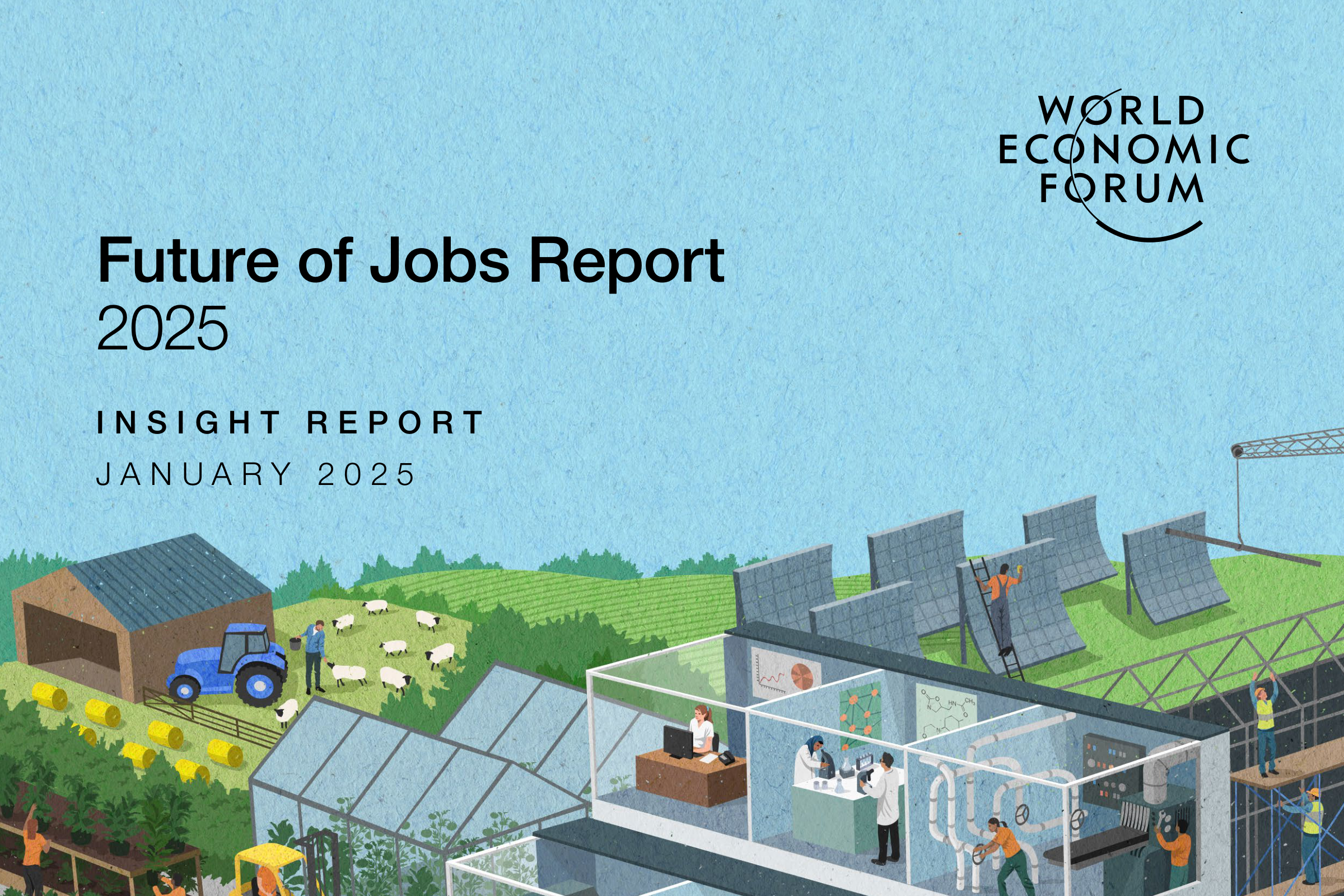
  • Future of Jobs Report 2025 by World Economic Forum

    Future of Jobs Report 2025 by World Economic Forum

    About the paper

    The World Economic Forum’s Future of Jobs Report 2025 analyses how technological change, geo-economic fragmentation, economic uncertainty, demographic shifts and the green transition are expected to reshape jobs, skills and workforce strategies by 2030.

    It is primarily an original employer survey, supplemented by data partnerships with ADP, Coursera, Indeed and LinkedIn; the survey covers more than 1,000 employers representing over 14 million workers across 22 industry clusters and 55 economies.

    The methodology is employer-perspective forecasting rather than labour-market measurement alone: the survey was conducted in late 2024 and asks organisations to estimate expected changes over the 2025–2030 period. The report is global in scope, but it explicitly focuses on larger companies and does not fully cover small enterprises or the informal sector.

    Length: 290 pages

    More information / download:
    https://www.weforum.org/publications/the-future-of-jobs-report-2025/

    Core Insights

    1. What are the main forces expected to transform global labour markets by 2030?

    The report identifies five broad forces: technological change, geo-economic fragmentation, economic uncertainty, demographic shifts and the green transition. These are presented not as separate trends, but as overlapping pressures that will reshape business models, employment and skill needs simultaneously.

    The most prominent single trend is broadening digital access, which 60% of employers expect to transform their business by 2030. Within technology, AI and information-processing technologies stand out even more strongly: 86% of employers expect them to transform their business, followed by robotics and automation at 58%, and energy generation, storage and distribution at 41%.

    Economic pressure remains highly important. Rising cost of living is the second-most transformative overall trend, cited by 50% of employers, while slower economic growth is cited by 42%. The green transition is also central: 47% expect climate-change mitigation to transform their business, and 41% expect climate adaptation to do so. Demographic change adds a further layer, with ageing populations affecting mainly higher-income economies and growing working-age populations affecting many lower-income economies.

    The report’s perspective is clearly employer-led: it is concerned with how organisations expect these forces to affect business transformation, jobs, skills and workforce planning. That gives the report practical value, but it also means its findings reflect employers’ expectations rather than a neutral prediction of what will definitely happen.

    2. What does the report predict about job creation, job displacement and the changing composition of work?

    The report predicts substantial labour-market churn. Based on employer expectations, structural labour-market transformation between 2025 and 2030 is expected to affect the equivalent of 22% of today’s jobs. That consists of 170 million jobs created, equal to 14% of current employment, and 92 million jobs displaced, equal to 8%, producing a net increase of 78 million jobs, or 7%.

    This is an important nuance: the report does not present the future of work as simple mass unemployment caused by technology. Its argument is that disruption will be large, uneven and reconfigurational. Some roles will grow quickly, some will decline sharply, and many workers will need to shift skills, roles or sectors.

    Technology is described as especially double-edged. Broadening digital access and AI are expected to create jobs and displace jobs at the same time. Robotics and autonomous systems are more clearly associated with net job displacement. The report’s underlying message is therefore not “technology destroys work” or “technology creates work”, but that technology changes the distribution of work and the skill profile required to remain employable.

    3. Which jobs are expected to grow or decline most, and why?

    The fastest-growing roles in percentage terms are mainly technology-related. These include Big Data Specialists, FinTech Engineers, AI and Machine Learning Specialists, Software and Applications Developers, Data Warehousing Specialists, Information Security Analysts and related roles. Green-transition roles also feature strongly, including Autonomous and Electric Vehicle Specialists, Environmental Engineers and Renewable Energy Engineers.

    However, the largest growth in absolute numbers is expected in frontline and foundational roles, not only in high-tech occupations. The report highlights Farm-workers, Delivery Drivers, Construction Workers, Salespersons and Food Processing Workers, alongside care and education roles such as Nursing Professionals, Social Work and Counselling Professionals, Personal Care Aides, and Tertiary and Secondary Education Teachers.

    The largest declines are expected in clerical and secretarial work. Cashiers and Ticket Clerks, Administrative Assistants and Executive Secretaries, Postal Service Clerks, Bank Tellers and Data Entry Clerks are among the roles expected to decline most. This reflects the combined impact of digitalisation, AI, automation and changing business processes.

    A key implication is that “future jobs” should not be understood only as AI engineers and data scientists. The report points to a more mixed labour-market future: high-growth technology roles, green-transition roles, care and education roles, and continued demand for many frontline jobs.

    4. How are skills expected to change, and what does this imply for workers and employers?

    The report estimates that 39% of workers’ existing skill sets will be transformed or become outdated over the 2025–2030 period. This is lower than the 44% estimate in the 2023 report and much lower than the 57% estimate in 2020, but it still represents a major level of disruption.

    Analytical thinking remains the most sought-after core skill, with seven in 10 companies considering it essential in 2025. It is followed by resilience, flexibility and agility, and leadership and social influence. This matters because the report does not frame the future skills agenda as purely technical. Human, cognitive and adaptive capabilities remain central.

    The fastest-growing skills are AI and big data, networks and cybersecurity, and technological literacy. These are followed by creative thinking, resilience, flexibility and agility, curiosity and lifelong learning, leadership and social influence, talent management, analytical thinking and environmental stewardship. Manual dexterity, endurance and precision are expected to see a notable net decline in demand.

    The report’s underlying assumption is that employability will increasingly depend on combining technical fluency with adaptability and judgement. This is especially important because the skills that differentiate growing from declining roles include resilience, flexibility and agility; resource management and operations; quality control; programming; and technological literacy.

    5. What workforce strategies do employers expect to use in response to these shifts?

    Upskilling is the dominant response. The report says 85% of employers plan to prioritise upskilling their workforce. In addition, 70% expect to hire staff with new skills, around half plan to transition staff from declining to growing roles, and 40% expect to reduce staff as some skills become less relevant.

    The scale of the training challenge is large. If the global workforce were 100 people, the report estimates that 59 would need training by 2030. Of these, 29 could be upskilled in their current roles, 19 could be upskilled and redeployed elsewhere in the organisation, and 11 would be unlikely to receive the reskilling or upskilling they need.

    Employers also identify skill gaps as the biggest barrier to business transformation, cited by 63% of respondents. This makes skills not just an HR issue, but a strategic bottleneck. The report also highlights employee health and well-being as a top strategy for improving talent availability, cited by 64% of employers, while reskilling, upskilling and better progression are also seen as important.

    Finally, AI-specific workforce strategies are central. Half of employers plan to reorient their business in response to AI, two-thirds plan to hire talent with AI-specific skills, and 40% anticipate reducing their workforce where AI can automate tasks. The report’s practical conclusion is that organisations face a dual challenge: they must adopt technology fast enough to remain competitive, while also redesigning jobs, training systems and talent pipelines fast enough to avoid widening skill gaps.

  • UK Corporate Affairs Trends for 2025 by FleishmanHillard

    UK Corporate Affairs Trends for 2025 by FleishmanHillard

    About the paper

    The paper is a forecast-style corporate affairs report on the challenges and priorities likely to shape 2025 for organisations operating in the UK.

    It is a mixed-input outlook rather than original survey research, grounded in firm data, observation, client discussions, and input from FleishmanHillard’s UK corporate affairs experts; the report does not clearly specify a respondent count, case count, interview number, or formal fieldwork process.

    Its geographic focus is primarily the UK corporate affairs landscape, though several trends are framed as global pressures affecting UK-based decision-making.

    Length: 32 pages

    More information / download:
    https://fleishmanhillard.co.uk/2024/12/corporate-affairs-trends-for-2025/

    Core Insights

    1. What is the report’s central argument about corporate affairs in 2025?

    The report’s main argument is that corporate affairs leaders are entering a more volatile, fragmented and demanding environment in which complexity itself becomes the defining condition. FleishmanHillard argues that leaders are being asked to do more by boards, executives and stakeholders at the very moment the information environment is becoming harder to read and harder to influence. Traditional media still matters, but it is no longer sufficient as the primary route to key audiences, whose media habits are spreading across more platforms and formats.

    The report says this new reality will be shaped by five interlocking trends: the politicisation of business values, the rise of geopolitics as a day-to-day business issue, the spread of misinformation and inauthentic content, the erosion of reliable data sources alongside the emergence of new ones, and the accelerating operational importance of AI. In other words, the report does not present 2025 as a year of one dominant disruption, but as a year in which multiple pressures converge and force corporate affairs teams to become more adaptive, audience-led and strategically embedded.

    2. What are the five key trends the report identifies, and why do they matter?

    The first trend, The Values Imperative, argues that politics is increasingly entering business life through employees, public debate and direct political targeting. Companies are under greater pressure to take positions, but the report warns that expression is only rewarded when audiences agree with the stance taken. That makes corporate values more than branding language; they become a decision framework for whether and how to engage on contentious issues.

    The second trend, The Corporate Diplomat, says geopolitical issues are no longer distant matters for government relations teams alone. Populism, nationalism, regulatory divergence, supply-chain disruption and state-linked cyber risks mean senior executives and corporate affairs leaders must increasingly act as diplomats themselves. The report suggests that success in one market may now depend on managing tensions involving another market, including a company’s home market.

    The third trend, Ubiquitous Malignancy, describes misinformation as a persistent feature of nearly every communications situation, not a rare exception. The report argues that communicators must judge how much of a situation is being shaped by inauthentic or misleading content and develop specific capabilities for intervention, especially as AI-driven deepfakes raise the stakes.

    The fourth trend, Data Erosion & Accretion, focuses on the weakening usefulness of old monitoring approaches, especially those heavily dependent on X/Twitter and text-based media. At the same time, audience attention is moving toward harder-to-monitor environments such as podcasts, video, WhatsApp and other closed or semi-closed platforms. New tools may help, but the report says the overall picture will become more cluttered and demand more sophisticated interpretation.

    The fifth trend, AI Moves Ahead, argues that generative AI is already improving speed and efficiency in communications work, but that bigger structural change is still ahead. The report sees current tools as operationally useful but limited, while newer models may reshape analysis, memory and self-learning capabilities more profoundly. That makes today’s experimentation a preparation phase for deeper transformation.

    3. What assumptions or perspective shape the report’s interpretation of these trends?

    The report is written from the perspective of a strategic communications adviser addressing corporate affairs leaders who must help organisations navigate uncertainty rather than merely manage publicity. Its underlying assumption is that communications is no longer a support function operating at the edge of decision-making; it is increasingly central to risk management, stakeholder navigation and executive judgement.

    A second assumption is that the environment is not becoming simpler or more controllable. Instead, the report assumes fragmentation, unpredictability and cross-border complexity will intensify. This is visible in how it treats politics, geopolitics, misinformation, data fragmentation and AI not as isolated topics, but as overlapping forces that reshape the communicator’s role.

    A third assumption is that organisations need clearer frameworks rather than louder messaging. The report repeatedly emphasises preparation: values frameworks, issue-assessment models, broader intelligence gathering, better geopolitical literacy, more nuanced data interpretation and structured AI adoption. That reveals a distinctly managerial and advisory lens. The purpose is less to predict headlines than to encourage more disciplined organisational readiness.

    4. What practical capabilities does the report say organisations need to build now?

    On values and politics, the report recommends reviewing the organisation’s values statement so it genuinely reflects shared principles, then using those values as a test for whether a political issue warrants engagement. It explicitly advises leaning strongly against engagement where an issue does not connect directly to a core business value or commercial need. That suggests restraint, not performative commentary, as the preferred operating model.

    On geopolitics, it argues for broader information gathering, deeper historical understanding, better assessment of tensions across key markets and supply chains, and more diplomatic skill sets such as negotiation and war-gaming. This implies that corporate affairs teams need to widen both their input sources and their strategic repertoire.

    On misinformation, the report says teams need methods for distinguishing authentic from inauthentic content, frameworks for deciding when to intervene, and readiness to communicate directly with audiences rather than relying solely on media or fact-checkers. It also stresses that countering misinformation may require behavioural science techniques and emotional engagement, not just rational rebuttal.

    On data, the recommendation is to push partners to improve coverage across podcasts and video, interpret reactions across multiple platforms rather than assuming one channel represents the whole picture, and strengthen human intelligence networks to compensate for what tools cannot see inside walled gardens such as WhatsApp.

    On AI, the report urges organisations to expand trials, identify tasks where GenAI should make the first attempt, and reposition employees from pure production roles toward advisory roles that guide AI strategically and improve output quality. The practical message is that AI adoption should be systematic and role-shaping, not ad hoc.

    5. What are the main implications of the report for corporate affairs leaders in 2025?

    The clearest implication is that corporate affairs leaders will need broader mandates and stronger judgement. The function is being asked to interpret political risk, geopolitical change, data ambiguity, misinformation threats and AI-enabled disruption all at once. That means success will depend less on excellence in any single channel and more on the ability to synthesise complex inputs into sound advice for senior leadership.

    A second implication is that old playbooks are becoming less reliable. Traditional media relations, basic social listening and fact-based rebuttal are still relevant, but they are no longer enough on their own. The report suggests that influence now depends on audience-led, channel-agnostic and emotionally intelligent engagement, supported by better frameworks and more diverse intelligence.

    A third implication is organisational: communications teams must evolve structurally, not just tactically. Values need to be operationalised, geopolitical awareness mainstreamed, misinformation preparedness embedded, data practices modernised and AI integrated into workflows. In that sense, the report presents 2025 as a capability-building year. The leaders who thrive will be those who treat communications as a strategic discipline for navigating uncertainty, not simply a function for message delivery.

  • State of PR Measurement 2024 by Muck Rack

    State of PR Measurement 2024 by Muck Rack

    About the paper

    The report examines how PR professionals measure, track and report their work, with a particular focus on which metrics they use, which they trust, the challenges they face, and how reporting is coordinated internally.

    It is based on original research: a self-administered online survey fielded from 11 to 21 October 2024, with 472 responses collected and 397 retained after data cleaning; the report gives a conservative margin of error of about ±5%.

    The geographic scope is not clearly specified in the report, although respondents were recruited primarily through Muck Rack’s database and email contacts.

    Length: 25 pages

    More information / download:
    https://muckrack.com/blog/2024/11/06/the-state-of-pr-measurement-2024

    Core Insights

    1. Why does PR measurement matter so much to practitioners, according to the report?

    Measurement matters because PR professionals see it as central to demonstrating the value of their work. The report shows that 86% say measuring and reporting PR efforts is either very important or extremely important, and 89% say the main reason they report on their work is to demonstrate impact to leadership or clients.

    It is also not a marginal activity within the profession. For 40% of respondents, measurement and reporting account for at least a quarter of their job, making it one of the more time-consuming parts of PR work. The report therefore presents measurement not as an optional add-on, but as a core part of how PR teams justify their contribution and maintain credibility with decision-makers.

    A further sign of its importance is that respondents link PR’s perceived value to measurability. The top factors seen as increasing PR’s value among internal stakeholders include producing measurable results and tying PR activities to key business initiatives. That suggests PR measurement is not only about internal reporting discipline, but also about status, influence and budget legitimacy inside organisations.

    2. Which metrics do PR professionals rely on most, and which do they trust least?

    The most commonly used metrics are number of stories placed, reach/impressions and website impact. Specifically, 85% track number of stories placed, 76% track reach/impressions, and 46% track website impact. On average, respondents say they track five metrics.

    However, the metrics that are most used are not always the same as those seen as most accurate. The three metrics considered most trustworthy are number of stories placed, reach/impressions and key message pull-through. Number of stories placed is the standout: 63% say it most accurately measures their efforts. Reach/impressions comes next at 42%, followed by key message pull-through at 35%.

    By contrast, respondents are notably sceptical about several metrics often associated with more sophisticated or business-oriented measurement. Pitch performance is seen as the least accurate by 32%, while sentiment and revenue impact are each named by 24%. Reach/impressions also appears on the “least accurate” list for 23%, showing that some widely used measures are also contested. In other words, PR professionals continue to rely heavily on familiar output and exposure metrics, while remaining uncertain about the validity of several commonly discussed alternatives.

    3. What does the report reveal about confidence and difficulty in PR measurement?

    The report reveals a profession that sees measurement as necessary, but not fully settled or secure in how it does it. Only 7% say they are extremely confident in the metrics they report, while 31% are very confident and 49% are only somewhat confident. That means roughly half of respondents occupy a middle ground: they are not without confidence, but neither are they fully convinced that their reporting tells the whole story well.

    The difficulty of the work reinforces that picture. Just 25% say tracking their efforts is easy or very easy, while 40% say it is neither easy nor difficult and 35% say it is difficult or very difficult. So although most teams do measure their work, many do so with uncertainty and friction.

    Time pressure appears to be part of the explanation. Most respondents spend relatively little time on measurement and reporting: 56% spend one to four hours per week, and 32% spend less than one hour. Altogether, 88% spend under four hours weekly. The report implies that PR measurement is treated as important, but often carried out under practical constraints that limit how rigorous or comprehensive it can be.

    4. What are the biggest obstacles preventing stronger PR measurement?

    The biggest obstacle is linking PR metrics to business goals. This is selected by 61% of respondents, making it the top challenge in the study. That is significant because it points to a structural problem: PR teams may be able to report activity and outputs, but struggle to connect those outputs to wider organisational priorities and outcomes.

    The next major challenge is managing stakeholder expectations, cited by 53%. This suggests measurement is not just a technical problem of data collection, but also a political and communicative one. PR professionals are operating in environments where different stakeholders may want different kinds of proof, at different levels of sophistication, and with different assumptions about what PR should be able to deliver.

    Other important barriers include unclear goals or success metrics, named by 38%, and not having the right goals or success metrics, cited by 23%. The report also notes that open-ended responses mentioned data quality, access to resources and maintaining consistency year over year. Taken together, these findings suggest the core weakness is not merely lack of tools, but a broader lack of alignment around what success looks like and how PR contribution should be evaluated.

    5. What broader picture does the report paint of the current state of PR measurement?

    The report paints a picture of a profession that is committed to measurement, but still in a transitional stage of maturity. Most PR professionals measure their work, most consider measurement highly important, and many recognise that metrics are essential for proving PR’s value. But this commitment sits alongside only moderate confidence, persistent methodological disagreement and fairly limited time investment.

    It also shows that measurement remains unevenly integrated inside organisations. Responsibility for reporting is spread across roles, with 32% saying the whole team collaborates equally, while others assign it to managers, coordinators, directors or others. Coordination with marketing is mixed: 31% say reporting is handled separately with no coordination, 30% share reports for alignment, and only 13% hold joint meetings to discuss combined metrics. This suggests PR measurement is still often siloed rather than fully embedded in a broader business-performance framework.

    The report’s underlying perspective is clear: PR needs better ways to demonstrate impact, especially to leadership. But the findings also suggest that the field has not fully resolved the tension between easy-to-report output metrics and more meaningful business-linked measures. The consequence is a measurement culture that is active and valued, yet still searching for stronger credibility, clearer standards and better organisational integration.

  • Global CommTech Report 2024 by Purposeful Relations

    Global CommTech Report 2024 by Purposeful Relations

    About the paper

    The report presents original research on how public relations, communications and corporate affairs professionals think about and use AI and communication technology.

    It is based on an online survey conducted via Microsoft Forms between July and September 2024, with 161 professionals surveyed across Africa, Asia-Pacific, Europe, the Middle East, North America and South America.

    The data is global in scope, although the respondent mix is weighted towards Western Europe and Eastern Europe.

    Length: 68 pages

    More information / download:
    https://purposefulrelations.com/global-commtech-report-2024/

    Core Insights

    1. What is the central argument of the report about AI and communication technology in public relations?

    The report’s core argument is that the PR and communications profession recognises AI as a major issue, but is still responding too cautiously, too narrowly and too operationally. The authors argue that the sector understands AI mainly as a tool for efficiency rather than as a strategic force that will reshape professional practice, organisational decision-making and the wider social licence around AI use.

    That argument appears early and runs throughout the report. The introduction says the industry sees AI as the “greatest challenge” but is not doing enough to address it. The executive summary repeats that pattern: AI is named as the top challenge, investment priority and training priority, yet actual preparedness remains weak. The report therefore frames the issue not as a lack of awareness, but as a gap between awareness and meaningful action.

    A second part of the argument is that communications teams are at risk of repeating earlier mistakes made around digital change. The report explicitly warns that, just as the profession lagged on search and social media, it could also lag on AI unless it moves faster on policy, literacy, leadership and governance. It presents AI not just as another toolset, but as a development with effects comparable to an industrial revolution. That is a deliberately strong claim, and it is used to justify the urgency of the report’s recommendations.

    Finally, the report argues that PR should not leave AI to technologists, lawyers or IT. Instead, it should play a central role in governance, ethics, stakeholder trust and organisational legitimacy. In other words, the profession’s real opportunity is not only to use AI more efficiently, but to shape how organisations adopt AI responsibly and credibly.

    2. What do the findings reveal about how PR professionals currently understand and use AI?

    The report shows that AI is now widely recognised as relevant, but that understanding of its value remains limited and uneven. Nearly half of respondents say AI skills are essential for communications professionals, and a broader majority rate them as important or essential. That suggests the profession no longer sees AI as marginal. However, the report repeatedly argues that respondents still associate AI mainly with simple, tactical uses rather than deeper strategic possibilities.

    This becomes clear in the perceived benefits. Respondents most often cite saving time and improving productivity, while far fewer point to improving quality, boosting creativity, or enabling more advanced strategic work. The dominant mental model is therefore efficiency-led: AI helps people do existing tasks faster. The report sees that as too narrow, because it underplays AI’s role in insight, planning, forecasting, governance and relationship management.

    The same pattern appears in how respondents think AI will affect practice areas. Many expect the biggest impact in consumer marketing communications, while far fewer expect major effects in crisis communications or public affairs. The authors interpret this as a misunderstanding of AI’s broader implications. In their view, the profession is over-associating AI with content production and underestimating how much it could reshape higher-stakes advisory and strategic work.

    Actual use also reflects this early-stage maturity. Respondents report using AI most often for alternative content versions, content creation, brainstorming, monitoring, summaries and related tasks. But some areas reportedly “didn’t work well”, especially media outreach and research, which the report suggests may say as much about weak prompting, poor training or wrong tool choice as about AI’s actual limitations. The report also notes use of both personal and work AI tools, with ChatGPT the most prominent. One especially striking finding is that 66% say they have used personal AI tools for work. The authors treat this as a warning sign because it suggests shadow usage, weak governance and possible privacy or compliance risks.

    So the overall picture is not one of rejection. It is one of partial adoption: interest is real, experimentation is happening, but the profession still tends to use AI as an assistant for tasks rather than as a source of strategic advantage.

    3. What are the main organisational gaps and barriers preventing better use of AI and communication technology?

    The report identifies two headline weaknesses around AI: policy and training. Sixty per cent of respondents say they do not have an AI policy, and only 43% say they have received AI training. The authors present those figures as the most urgent warning signs in the report. In their view, this means many teams are experimenting with AI without clear rules, formal literacy or strong organisational support.

    Training itself also seems incomplete. Among those who have received it, most training is focused on practical use rather than ethics, safety or security. The report sees that as misaligned with the risk landscape, because respondents also identify legal, copyright, privacy and security concerns as the biggest AI challenges. In other words, the profession is worried about risk but is not training people proportionately on risk.

    A related weakness is the lack of formal AI governance. Only about a third report that their team has an AI working group. The report suggests that this may mean either such groups do not exist or that communications is not represented in them. Either way, the implication is that PR is not consistently at the table where AI policy and practice are being shaped.

    On the wider technology side, the biggest barriers are integration and capability. Three quarters cite difficulty integrating different systems, and two thirds cite the team’s ability to use technology effectively. Resistance to change also matters, but the report treats training and system complexity as the more structural obstacles. It argues that many organisations already pay for tools they do not fully use, which makes underuse and lack of upskilling a recurring theme.

    There is also a leadership gap. Most respondents say there is no technology leader in their team. Where such leadership does exist, it often sits outside communications. The report sees that as a serious weakness because technology choices, adoption and governance are then shaped elsewhere, even though they increasingly affect communications performance directly.

    Overall, the report’s diagnosis is that the main barriers are not merely technical. They are organisational: insufficient governance, weak literacy, fragmented systems, underused tools and a lack of ownership inside the communications function.

    4. How does the report assess the broader state of communication technology adoption beyond AI?

    Beyond AI, the report paints a fairly critical picture of the communications profession’s technology habits. Its broader claim is that many teams still rely on outdated, inefficient tools and workflows, especially spreadsheets and email, even when more suitable specialist tools exist.

    This is most visible in relationship and task management. More than half of respondents say they use spreadsheets to manage relationships with contacts, and 43% say spreadsheets are their main way of managing projects and tasks. The report treats this as evidence that communications teams have not modernised core operational systems. It argues that these habits make teams less efficient, less collaborative and less capable of using data well.

    The report also highlights inconsistent use of collaboration tools. Microsoft Teams appears to be the most common collaboration platform, but email remains heavily relied upon, which the report regards as a sign of outdated workflow culture. Likewise, even where organisations already subscribe to tools included in broader software suites, such as Microsoft Planner, adoption remains low. The authors interpret this as wasted investment: teams are paying for capabilities they neither configure nor train people to use properly.

    At the same time, respondents do understand that communications technology matters. Media monitoring, media databases, content creation tools, collaboration systems and project management tools are all rated as important. So the issue is not that professionals deny the value of technology. The issue is that their actual tool choices and usage patterns often lag behind that stated recognition.

    The report is especially pointed about agencies and consultancies. It says they continue to rate themselves as more competent than in-house teams at using and adopting technology, yet the wider evidence in the report suggests in-house teams are often ahead on training, policy and actual maturity. That creates an interesting contrast between self-perception and practice.

    In short, the report sees broader comms-tech adoption as underdeveloped. The profession may be surrounded by tools, but it still often lacks the processes, discipline and leadership needed to turn those tools into real operational advantage.

    5. What conclusions and practical implications does the report draw for the future of the profession?

    The report’s conclusion is that doing nothing is no longer a viable option. It argues that AI and communication technology are not temporary trends but structural shifts that will affect every part of the profession. That leads to a clear practical message: communications teams must move from passive awareness and scattered experimentation to deliberate capability-building.

    The immediate priorities are concrete. The report calls for organisations to develop AI policies, expand AI training, establish working groups, improve technology leadership and make better use of existing systems. It also recommends moving away from spreadsheet-led processes, improving collaboration and focusing technology investment on real pain points in workflows and decision-making.

    But the implications go further than operational tidying-up. The report argues that senior leaders must engage personally with AI, not delegate it downward. It explicitly rejects the idea that AI is mainly for junior staff or content creators. Instead, the report suggests that AI can enhance senior advisory work in areas such as corporate affairs, crisis communications and stakeholder influence. That widens the significance of the findings: the future of the profession is not only about efficiency gains, but about whether experienced communicators can use AI to improve strategic judgement and organisational value.

    There is also a normative conclusion. The profession, the report says, has a responsibility to help organisations secure the social licence to use AI. That means PR should contribute not just to messaging, but to ethical use, governance, transparency and public trust. This is arguably the report’s most ambitious claim: that AI could elevate the profession if communications leaders step into a broader role around legitimacy and responsible adoption.

    So the final implication is twofold. On one level, the profession needs better tools, training and processes. On another, it needs a bigger sense of its own role. The report sees AI as both a capability challenge and a professional identity test. Teams that treat it only as automation will fall behind; teams that treat it as a strategic, ethical and organisational issue may strengthen their relevance.

  • Future of Professionals Report 2024 by Thomson Reuters

    Future of Professionals Report 2024 by Thomson Reuters

    About the paper

    Thomson Reuters’ Future of Professionals Report 2024 examines how AI and GenAI are reshaping professional work across legal, tax, accounting, global trade, risk, fraud, compliance, government, and corporate C-suite roles.

    It is original survey research based on 2,205 responses collected through 15–20 minute surveys, with respondents across the United States, UK, Canada, Mainland Europe, Latin America, Asia-Pacific, Africa, and the Middle East/North Africa.

    The report is heavily AI-focused because respondents identify AI as the dominant force currently driving change in professional services.

    Length: 37 pages

    More information / download:
    https://www.thomsonreuters.com/en-us/posts/technology/future-of-professionals-2024/

    Core Insights

    1. What is the central argument of the report?

    The report argues that AI and GenAI are now the dominant forces reshaping professional work, not as distant possibilities but as practical technologies already influencing strategy, workflows, value creation, pricing models, and career expectations.

    The strongest evidence is that 77% of respondents believe AI will have a high or transformational impact on their work over the next five years, up from 67% in the 2023 report. The report presents this as a shift from speculative concern to more concrete expectation: professionals are no longer merely wondering whether AI matters; they are beginning to understand where and how it will affect their daily work.

    The report’s tone is notably optimistic. Thomson Reuters concludes that AI can make professional work more efficient, productive, and fulfilling. It repeatedly frames AI as a way to release professionals from routine or labour-intensive tasks so they can focus on judgement-based, strategic, client-facing, and higher-value work.

    However, the report does not argue that AI adoption will be automatic or risk-free. Its central argument is conditional: AI can be a force for good, but only if organisations combine adoption with responsible use, human oversight, data security, transparency, training, and new business models.

    2. How are professionals currently using AI, and what does this reveal about adoption maturity?

    Current AI use appears practical but still relatively early-stage. Respondents most commonly use AI-powered technologies for drafting documents, summarising information, conducting basic research, preparing communications, reviewing documents, and generating first drafts.

    The report says 50% of respondents who have used AI as a starting point describe its output as “a basic starting point” where they still need to do most of the work. Another 28% say it provides “a strong starting point” that mainly requires editing. This suggests that AI is already useful, but professionals still see it primarily as an assistant rather than an autonomous producer of reliable final work.

    The main barriers among non-users are also revealing. Concerns centre on accuracy, data security, ethics, uncertainty about what AI can be used for, and uncertainty about how to access it. The report notes generational differences too: Gen Z professionals have tried AI at higher rates, while baby boomers show lower current usage but surprisingly ambitious expectations for future AI assistance.

    The adoption picture is therefore mixed: AI is already embedded in common professional tasks, but many users still regard it as a productivity aid that requires significant human review. The report’s own interpretation is that trust will depend on transparency, benchmarking, responsible innovation, and better user education.

    3. What productivity and value gains does the report expect from AI?

    The report’s most concrete productivity claim is that AI could free up four hours per professional per week within one year, eight hours within three years, and twelve hours within five years. Based on an assumption of 48 working weeks per year, that would equal roughly 200, 400, and 600 hours respectively.

    This is one of the report’s most important findings because it connects AI adoption to organisational strategy. Freed-up time is not presented simply as a cost-saving mechanism. Respondents say they would use additional time for work-life balance, client work, long-term projects, business development, process improvement, strategic planning, research, training, and better workload management.

    The report also distinguishes between efficiency and value. More than half of professionals are excited about AI because of time savings and productivity improvements, but 39% are most excited about AI’s ability to add new value to their work. Examples include handling large volumes of data more effectively, improving client response times, reducing human error, enabling advanced analytics, and supporting better decision-making.

    This distinction is crucial. The report does not merely say AI will help professionals do the same work faster. It argues that AI may allow professional services to change what kind of work is done, what quality of service is delivered, and where professionals focus their expertise.

    4. What risks, ethical concerns, and governance needs does the report identify?

    The report identifies several persistent concerns:

    • accuracy of outputs
    • data security
    • ethical use
    • overreliance on AI
    • inadequate human judgement
    • and unclear accountability.

    These concerns are especially important because the professions covered in the report often involve legal, regulatory, financial, compliance, or high-stakes advisory work.

    Professionals draw a clear ethical boundary around full AI autonomy in high-stakes professional judgement. More than 95% of legal and tax respondents say it would be a step too far for AI to represent clients in court or make final decisions on complex professional matters. Legal professionals are particularly resistant to AI providing legal advice, while respondents in tax, risk, fraud, and compliance appear somewhat less opposed to AI involvement in strategic advice.

    The report finds no single consensus on responsible AI use, but several principles recur. Almost two-thirds of respondents see data security as vital, both for prompts and outputs. A similar share see compulsory human review as critical. Other important elements include transparency about data sources, clarity on which tasks AI may be used for, bias mitigation, deletion of personal data, and standards for training data.

    On enforcement, respondents favour certification processes for AI systems and standards developed by professional or industry bodies. Government regulation, company guidelines, whistleblowing, and algorithm audits are also mentioned, but the report presents certification and professional standards as the leading options.

    5. What are the broader implications for professional careers, leadership, and business models?

    The report’s broader implication is that AI will shift the nature of professional work rather than simply eliminate it. Fear of widespread job loss appears less prominent than in the previous year’s report. Instead, 85% of respondents believe new or additional roles will be created to manage broader AI use.

    The human skills expected to become more important include problem-solving, creativity, judgement, strategic thinking, and the ability to manage AI responsibly. The report therefore frames the future professional not as someone replaced by AI, but as someone who must become better at using AI while preserving human expertise.

    For leaders, the report implies that AI adoption is not just an IT project. It affects talent strategy, operating models, pricing, client value, workflow design, risk management, and organisational culture. Leaders are advised to assess skills, invest in training, create responsible AI principles, run pilot projects, scale successful use cases, and explore how AI can open new sources of stakeholder value.

    The pricing implication is especially significant for professional services firms. Many respondents expect hourly-rate pricing to decline over the next five years. As AI makes routine work faster, firms will need to explain why clients should still pay premium fees for work completed more efficiently. The report argues that firms must move towards value-based pricing and become better at articulating the value AI adds beyond speed.

    The conclusion is optimistic but demanding: AI can make professional careers more fulfilling and organisations more competitive, but only for those that actively embrace the technology, redesign work around it, and take responsibility for its limits.

  • IC Index 2024 – The Trust Issue by Institute of Internal Communication

    IC Index 2024 – The Trust Issue by Institute of Internal Communication

    About the paper

    The report examines how internal communication shapes trust in UK workplaces, with a particular focus on leadership trust, strategy belief, change communication, AI, hybrid work and organisational stances on societal issues.

    It is a mixed-methods report: the core evidence is a representative quota survey of 4,000 UK workers aged 18–64 in organisations with 500+ employees across the UK, fielded 6–20 March 2024, supplemented by a practitioner survey of 220 IoIC members and six senior-leader interviews; the report is UK-wide and the methodology is clearly stated.

    Length: 29 pages

    More information / download:
    https://www.ioic.org.uk/resource/ic-index-2024-report-trust-issue.html

    Core Insights

    1. What is the report’s central argument about the relationship between internal communication and trust?

    The central argument is that good internal communication is not a peripheral support function but a core condition for organisational trust. The report makes this case repeatedly: where employees rate internal communication as excellent, trust in leadership is far higher, engagement is stronger, and people are more likely to stay with their employer for longer. The report frames trust not as an abstract cultural nice-to-have, but as something communication actively builds, protects and, when mishandled, damages.

    The report’s headline message is that “good IC is integral to trust” and that this matters especially in a context of uncertainty, continuous change and rising expectations around authenticity and empathy. It argues that communication is the basis of trust in workplace relationships and then tests that claim empirically through the Trust Index and associated measures. The data show a 74-point difference in trust in senior leaders between employees who rate communication as excellent and those who rate it as poor, which is an enormous gap and one of the strongest pieces of evidence in the report.

    The report also suggests that communication matters most where personal contact is weaker. Trust in direct managers is higher than trust in senior leaders or the CEO, and the authors infer that communication becomes even more important as the distance between employees and leaders increases. In other words, for senior leadership, communication is not just a channel for trust; it is often the main mechanism through which trust is experienced at all.

    So the report’s big idea is clear: internal communication is a strategic trust infrastructure. It influences whether employees think leaders are competent, honest, empathetic and acting in the right interests.

    2. Which specific factors most strongly build trust in leaders and organisations?

    The strongest trust-building factor across leadership levels is open and honest communication. On the report’s trust model, belief that employer communications are open and honest is the top driver of trust in both the CEO and the wider leadership team, and it also remains one of the top drivers for trust in direct managers. Alongside this, empathy matters greatly: employees need to feel that leaders understand the challenges they face.

    For senior leaders and CEOs specifically, trust also depends heavily on strategic credibility. Employees must believe that the organisation’s strategy is the right one for success. The report goes further by identifying what most strengthens that belief: not just knowing what the strategy is, and not just hearing about progress, but understanding how one can personally contribute to achieving it. When employees know their own contribution, belief in the strategy jumps by 35 points compared with people who only know the strategy and its progress. That is one of the report’s most important causal clues.

    For direct managers, slightly different drivers come to the fore. The most important is behavioural consistency: managers must act in line with the organisation’s values and behaviours. Frequency of communication also matters here; employees need to hear from their direct manager at least every few days to weekly. So trust in managers is built less by abstract strategy and more by visible, consistent, everyday conduct.

    The report also shows that feeling valued and believing the organisation operates in employees’ best interests are powerful trust builders. In fact, employees who believe the organisation acts in employees’ best interests have the highest Trust Index scores. This means trust is not only about message quality. It is also about whether communication aligns with lived organisational reality. A polished message cannot compensate for a widespread belief that the organisation mainly serves profits, leadership interests or shareholder priorities.

    3. What does the report reveal about the main trust weaknesses inside organisations today?

    The report’s most striking weakness is that trust becomes more fragile the higher up the hierarchy you go. Overall trust is fairly positive, with a combined Trust Index of 63%, but this masks a steep gradient: 75% trust their direct manager, 58% trust the leadership team, and only 55% trust the CEO or most senior leader. Many employees are not openly negative so much as uncertain, especially about senior leaders. That suggests distance, inconsistency and lack of direct connection are key problems.

    A second major weakness is perceived organisational self-interest. Only 43% believe their organisation operates in employees’ best interests, while larger proportions think organisations prioritise shareholders, profits and customers. This matters because belief that the organisation acts in employees’ interests is tightly linked to trust. The report also shows that this belief declines as organisation size increases, suggesting scale makes it harder to sustain a credible sense of mutuality between employer and employee.

    A third weakness is the existence of distinct trust segments, including a sizeable cynical bloc. The report identifies four broad trust types: Total Trusters, Proof Seekers, Senior Sceptics and All-round Cynics. The last group makes up 22% of employees and is characterised by very low trust in managers, leaders and the organisation as a whole. This is important because it shows that mistrust is not evenly distributed. Some employees need more evidence, some mainly distrust senior leadership, and some are alienated across the board. That means communicators cannot assume a single audience psychology.

    The report also points to a persistent communication inequality between digitally connected and non-connected workers. Employees who spend most of their time away from computers report lower satisfaction with communication and lower trust, especially in the CEO. This suggests that organisations still struggle to create equitable communication environments across frontline, operational and desk-based roles.

    4. How does communication affect employees’ experience of change, AI and hybrid working?

    The report treats these as live stress-tests of trust, and in each case communication emerges as decisive.

    On change, the findings are particularly strong. Four in ten employees say their organisation has restructured in the last year, and many have experienced redundancies, negative headlines, business transformation or leadership change. Yet the report argues that low trust is not an inevitable consequence of change itself. Rather, it is a consequence of change in organisations where communication is poor. Among employees who have been through a restructure, those who rate communication as excellent are dramatically more likely to believe communications are open and honest and to trust senior leaders and the CEO. The gaps between excellent and poor communication are above 50 points on these measures.

    Employees are also very clear on what better change communication looks like. They want clarity on the reasons behind change, honesty about the impact, and more listening. They also want earlier communication and more detail on the plan. The report’s underlying point is that people do not necessarily reject change itself; they reject opacity, spin and one-way communication.

    On AI, the report finds a trust deficit, especially for communications that are supposed to feel human. Around one third would not trust at all a CEO message developed with AI, and similarly high scepticism exists for manager messages and AI-created visual content featuring people. Trust is somewhat higher for impersonal content such as newsletters, intranet articles or policy documents. The report’s interpretation is that AI is less acceptable when it appears to simulate human presence or voice. It also notes that employees with higher overall trust in their organisation are more comfortable with AI use, implying that AI adoption depends on prior trust, not just technical capability.

    On hybrid work and return-to-office mandates, the findings are especially damaging. More than two in three employees do not believe the reason their employer gave for requiring office attendance. Employers most often cited collaboration, but many employees believe the real motive was oversight of working hours. The report presents this as a credibility gap: it is not simply that employees dislike the policy, but that they distrust the communicated rationale. That makes return-to-office communication a textbook example of how message–motive misalignment corrodes trust.

    5. What are the practical implications for internal communicators and organisational leaders?

    The report’s practical implication is that internal communication should be treated as a strategic lever for trust, retention and organisational performance, not as a downstream distribution function. The evidence gives communicators a stronger business case: excellent communication correlates with higher engagement, lower turnover intentions, stronger trust and greater belief in strategy. That means communication teams can argue for investment not only on cultural grounds, but on operational and performance grounds too.

    For communicators, one implication is to focus less on message volume and more on message credibility. The report repeatedly rewards openness, honesty, empathy, clarity and visible listening. It suggests that communication works best when it helps employees understand not only what is happening, but why, what it means for them, and how their voice is being heard. This is especially important during change, where candour matters more than polish.

    A second implication is that managers matter enormously as communication intermediaries. Employees value managers who listen, set clear objectives and offer personal support, yet only a minority of managers have been trained in key communication capabilities, especially change communication and support during personal issues. The report therefore points towards a practical priority: equip managers better, because they are central to trust formation, especially for less digitally connected workers.

    A third implication is that leaders must communicate strategy in a participatory rather than merely explanatory way. Employees need to know how they personally contribute. This moves communication beyond broadcasting strategy slides and into helping people connect their work to organisational direction. That is where belief in strategy becomes materially stronger.

    A fourth implication is that communicators and leaders need tighter alignment with HR and external communication. The report says this explicitly in relation to change and societal issues. Questions about layoffs, hybrid work, climate stance or public values cannot be handled well in silos. Employees interpret silence, inconsistency and vague positioning as signals in themselves.

    Finally, the report implies a more sober lesson: trust cannot be built by communication alone if the organisation’s conduct contradicts the message. Since trust is strongly tied to whether employees think the organisation acts in their interests, lives its values and genuinely listens, communication succeeds best when it reflects reality rather than attempts to mask it. In that sense, the report is not just a defence of internal communication. It is also a challenge to leadership behaviour.

  • State of the Global Workplace 2024 by Gallup

    State of the Global Workplace 2024 by Gallup

    About the paper

    The report examines the state of employee engagement, wellbeing and mental health worldwide, and argues that work quality, labour conditions and especially management quality shape both employee wellbeing and organisational performance.

    It is a mixed-methods report based primarily on Gallup World Poll survey data, supplemented by follow-up interviews with employees and a secondary Labour Rights Index; the 2023 dataset includes 128,278 employed respondents aged 15+ and the long-run trend dataset covers 2,336,570 employed respondents from 2009–2023, with global polling spanning more than 160 countries and areas.

    Length: 152 pages

    More information / download:
    https://www.scribd.com/document/758783089/state-of-the-global-workplace-2024-download

    Core Insights

    1. What is the report’s central argument about the relationship between work and employee wellbeing?

    The report’s central argument is that work is not just an economic activity but a major driver of people’s daily emotional health and overall life evaluation. Gallup frames the workplace as a key site where mental health can either worsen or improve, depending on the quality of employees’ experiences, especially their level of engagement and the way they are managed. The report explicitly links low engagement to weak wellbeing and estimates that low employee engagement costs the global economy US$8.9 trillion, equal to 9% of global GDP.

    A core idea running through the report is that poor work experiences spill into life outside work. Employees who dislike their jobs are described as having high levels of daily stress and worry, and in several cases their emotional profile is as bad as, or worse than, that of unemployed people. By contrast, employees who are engaged at work are much more likely to enjoy their daily lives and to be thriving overall. The report therefore treats employee engagement not as a soft HR metric, but as a serious indicator of human and organisational health.

    2. What does the report show about the global state of employee mental health and engagement in 2023?

    The report presents a mixed picture. Global employee engagement stalled in 2023 at 23%, while overall wellbeing declined slightly from 35% to 34% thriving. At the same time, 41% of employees reported experiencing a lot of stress the previous day, 22% sadness, 21% anger and 20% loneliness. These figures support Gallup’s broader claim that most of the world’s employees are still struggling at work and in life, even if some long-term indicators remain near record highs.

    Two patterns stand out particularly strongly. First, loneliness is a major issue: one in five employees globally report daily loneliness, and this rises to 25% among fully remote workers, compared with 16% among fully on-site workers. Second, younger workers appear to be losing ground. The drop in wellbeing in 2023 was concentrated among employees under 35, which the report treats as a significant warning sign for leaders.

    The report also shows that engagement sharply differentiates employee experience. The chart on page 8 shows that 54% of actively disengaged employees report stress, compared with 34% of engaged employees, while 50% of engaged employees are thriving versus only 17% of actively disengaged employees. That is one of the report’s clearest empirical messages: the emotional gap between engaged and disengaged employees is large and consequential.

    3. How do economics, labour protections and job-market conditions influence employee wellbeing?

    Gallup argues that employee wellbeing is shaped not only by immediate workplace experience but also by broader structural conditions. One of the clearest findings is that countries where people believe it is a good time to find a job tend to have lower active disengagement. The report interprets this to mean that workers in healthier job markets have more freedom to leave bad employment situations, whereas those in weak labour markets may feel trapped in jobs they dislike. Importantly, Gallup says this relationship is stronger for active disengagement than for engagement: better economic conditions may reduce bitterness, but they do not automatically create inspiration.

    The report also introduces the Labour Rights Index, which tracks the presence or absence of 46 labour-related statutes across 135 countries. It finds that stronger labour protections are positively associated with better present life evaluation, especially in areas such as maternity protections, fair wages, social security, employment security, fair treatment and safety. However, Gallup is careful to note that the index measures the existence of laws, not their enforcement, and that these relationships are analysed while controlling for income and demographic variables.

    At the same time, Gallup does not present labour protections as a substitute for engagement. Instead, it argues that the strongest emotional outcomes appear when supportive policy environments and engaged work experiences coincide. On page 15, the table shows that engaged employees in countries in the upper half of the Labour Rights Index report lower stress, sadness, loneliness, anger and worry than comparable employees in lower-protection settings. This supports one of the report’s more nuanced conclusions: labour law and engagement are complementary, not competing, sources of worker wellbeing.

    4. Why does the report place such strong emphasis on managers?

    The report treats the manager as the decisive lever inside organisations. Its clearest claim is that managers account for 70% of the variance in team employee engagement. That makes management quality, in Gallup’s view, more important for engagement than broad macro conditions such as economic context or labour protections. When managers are engaged, employees are more likely to be engaged too, and this relationship is visible even at the country level.

    But Gallup also adds an important complication: managers themselves are under strain. The report says managers are more likely than non-managers to be engaged and thriving, yet they are also more likely to feel stressed, angry, sad and lonely, and more likely to be looking for another job. That means managers are both the mechanism through which engagement is created and a group whose own wellbeing may be deteriorating. The implication is that organisations cannot simply ask managers to support others while ignoring managers’ own emotional load.

    The report’s practical argument follows from this. Great managers create engagement through goal-setting, meaningful feedback, accountability and an ongoing relationship grounded in respect, positivity and knowledge of each employee’s strengths. In the report’s logic, employee engagement is relational rather than procedural. That is why Gallup repeatedly returns to the manager-employee relationship as the main channel through which people move from indifference to inspiration.

    5. What conclusions does the report draw for leaders and organisations?

    The report’s overall conclusion is that organisations should stop treating wellbeing as something that can be fixed mainly with apps, perks or resilience training, and focus instead on the structural and managerial conditions of work itself. Gallup argues that poor management practices are a major source of employee stress, and that meaningful improvements come from organisation-level changes such as better management, better scheduling, better resources and better job design.

    It also argues that high-engagement organisations do not emerge by accident. On pages 20–21, Gallup says best-practice organisations reach engagement rates far above the global norm, with roughly three-fourths of managers and seven in 10 non-managers engaged. These organisations prioritise manager hiring and development, integrate engagement into the full employee and manager life cycle, and make wellbeing visible and consistent in both work and life support.

    Finally, the report ties these cultural and managerial choices to hard performance outcomes. Its conclusion cites Gallup’s 2024 meta-analysis of more than 183,000 business units across 53 industries and 90 countries, showing that highly engaged teams are associated with better wellbeing, productivity, profitability, customer loyalty, retention and safety. So the report’s final message is both human and commercial: improving engagement is not merely about making employees feel better; it is a route to stronger organisational performance.

    A point worth noting about the methodology is that, while the report is robust in scale and clear about its survey base, it combines different evidence types: original global survey research, follow-up qualitative interviews, and secondary legal-policy data from the Labour Rights Index. That makes it analytically rich, but some of its policy conclusions are associative rather than strictly causal.

  • Fighting Fatigue with Focus – 2024 C-suite Perspectives Study by Padilla

    Fighting Fatigue with Focus – 2024 C-suite Perspectives Study by Padilla

    About the paper

    The paper is a mixed-methods executive insight report on how C-suite leaders’ priorities and communication challenges have shifted, especially under economic pressure, hybrid work, declining worker well-being and leadership fatigue.

    The report combines an online survey of more than 100 senior leaders and company owners, in-depth interviews with more than 30 C-suite leaders, an online survey of more than 1,000 employed adults, and desk research; the fieldwork was conducted in summer/fall 2023, but the geographic scope is not clearly specified in the report.

    Length: 12 pages

    More information / download:
    https://padillaco.com/post/fighting-fatigue-with-focus

    Core Insights

    1) What is the report’s central argument about the current mindset of C-suite leaders?

    The report’s core argument is that senior leaders have not fundamentally changed their top priorities, but those priorities have become sharper and more intense because the past 18 months have produced a sense of leadership fatigue. Padilla argues that the C-suite has moved from a more “conflicted” mindset, shaped by COVID, social issues and geopolitical uncertainty, towards a more “focused” mindset shaped by economic pressure, hybrid work, worsening well-being concerns and late-career reassessment. The recommended response is not grander rhetoric, but tighter focus: business outcomes, simpler storytelling and stronger preparation of the next generation of leaders.

    This is important because the report does not frame fatigue as mere burnout language. It presents fatigue as a strategic condition that affects decision-making, communication style and succession planning. On page 11, the recap diagram makes the shift explicit: yesterday’s response required resilience, humanity and “translucency”, whereas today’s response requires simplification, story-based communication, leadership development and, in some cases, leaders stepping down or back.

    So the report’s overall meaning is that leadership today is becoming narrower, more pragmatic and more outcome-driven. The implied message is that communicators and advisers must adapt to that reality rather than assume executives still have the appetite for broad agendas or abstract positioning.

    2) How have leaders’ priorities changed since Padilla’s earlier report, and what remains consistent?

    What remains consistent is the underlying business agenda. The report says C-suite priorities “haven’t changed”, but the most important challenges are now more pronounced. Compared with the earlier report, rising inflation is up by 15 percentage points, adapting to change or innovating the business is up by 11 points, adapting to market shifts is up by 9 points, and differentiating from competitors is up by 8 points. Achieving business performance goals is also up, though more modestly.

    What has changed is the context around those priorities. In the earlier phase, leaders were navigating COVID effects, racial reckoning, emerging social issues, unsettled employees, geopolitical uncertainty and fears of economic slowdown. That produced a “conflicted” mindset. In the current phase, the environment is described as a retracting economy, declining worker well-being, the impacts of hybrid work and leaders “entering the last lap” of their careers. This creates a more focused, but also more compressed, leadership posture.

    The report also suggests that this shift changes how leaders want communication delivered. Under today’s pressure, leaders want a clearer line from communication to business outcomes. Page 7 states that communicators should articulate the “why”, use business storytelling, begin with the story, then follow with key messages and proof points. That reveals an assumption running through the report: clarity is no longer just a stylistic virtue; it is a management necessity in an environment of fatigue and constrained attention.

    3) What does the report say about DEI, ESG and corporate responses to external social issues?

    The report presents all three areas as still relevant, but more conditional and more tightly tied to business relevance than before.

    On DEI, Padilla says more than half of both leaders and employees feel brands have made progress, yet very few see DEI as a top business priority. The report notes that only a small share of C-suite leaders list achieving DEI commitments as a top business challenge, even as employee belief that their employer prioritises DEI has risen. The interpretation is that DEI has not disappeared, but it is no longer the dominant leadership conversation. The quote on page 4 captures this: DEI is “still relevant”, but “not the main topic of conversation.” The report also flags ageism as an underappreciated issue, noting that 27% of leaders and employees over 52 say they have experienced age-related discrimination in their career.

    On ESG, the report is even more explicit about pragmatism. It says ESG as a whole remains relatively low on leaders’ priority lists, but business-critical elements still receive attention. Forty-three per cent of leaders say they do not have formal ESG initiatives, while 33% focus on ESG aspects tied to business metrics or stakeholder needs. The implication is not that ESG is over, but that it survives where it can be linked to differentiation, customer relevance and measurable organisational value.

    On external social issues, the report shows a divided and cautious stance. According to the chart on page 6, 36% of C-suite leaders avoid taking a stand because of cost, while 33% do not hesitate to take a stand on relevant issues. At the same time, 46% of employees expect brands to respond to major social issues through action. Padilla’s implication is that organisations need an internal decision framework for when to speak, rooted in company purpose, stakeholder groups and likely ripple effects.

    Taken together, these sections reveal the report’s broader perspective: values-led issues have not vanished, but the licence to act on them now depends far more on strategic fit, stakeholder logic and business pragmatism than on broad principle alone.

    4) Where does the report identify the biggest disconnects between leaders and employees?

    The clearest disconnect is around employee well-being. Leaders generally believe well-being has stayed the same or improved over the previous 18 months: 65% say it has stayed the same and 26% say it has improved. But the employee-side benchmark cited on page 8 points in the opposite direction: about two-thirds of employees say well-being has worsened or stayed the same, while leaders are much more likely to think it has improved.

    This matters because the report suggests leaders may believe that post-COVID investments in benefits, flexibility or work environment have solved more than they actually have. The phrase “My Employees Are Doing Great—Aren’t They?” is deliberately ironic. It signals that executive perception may be lagging behind lived employee experience. The implication is that organisations need more frequent pulse checks, closer examination of whether well-being programmes are actually valued, and a clearer definition of the employee experience they are trying to create.

    A second disconnect emerges around hybrid work. Leaders recognise that employees value flexibility, and many leaders value it themselves, but they also believe hybrid work carries long-term costs for culture, work quality and leadership development. The visual on page 9 is especially revealing: hybrid work creates a generational “hourglass” in leadership development, with early-career and late-career staff more likely to be present in the office, while mid-career staff are less present because of longer commutes and more home commitments. That suggests the middle layer, often crucial for mentoring and managerial continuity, may be the least physically connected.

    A third disconnect is more implicit: older leaders and employees appear to be moderating their ambitions at the same time as organisations urgently need stronger succession pipelines. Among employees over 52, 62% want their career or responsibilities to stay the same or be simplified, while only 30% want growth. Meanwhile, 30% of C-suite leaders are seeing peers step away earlier or extend their stay, and nearly 1 in 10 are considering leaving earlier themselves.

    The cumulative effect is a leadership system under strain: employees may be less well than leaders think, hybrid work may be weakening developmental bonds, and succession assumptions are becoming less reliable.

    5) What are the practical implications for leadership and communication going forward?

    The report’s practical recommendations are quite direct. First, communicators and leadership teams should anchor initiatives in business outcomes, not just activity. Page 7 explicitly urges leaders to focus on outcomes, articulate the “why” and use business storytelling. That means communication should not begin with channels, campaigns or messaging architecture. It should begin with the business story that leaders need people to understand and act on.

    Second, companies need more disciplined internal listening and more realistic culture management. The well-being disconnect suggests leaders cannot rely on assumptions or legacy investments. The report recommends pulse checks, clearer articulation of the desired culture and a more deliberate mapping of the ideal employee experience. In other words, culture should be treated less as a slogan and more as an operating system that requires measurement and adjustment.

    Third, hybrid work needs to be managed as a developmental issue, not only a flexibility issue. The page 9 diagram shows that hybrid arrangements affect collaboration, culture and especially leadership development. The recommendations therefore include improving collaboration tools, prioritising management feedback, strengthening the office’s “sense of place”, and balancing clarity with flexibility in policies and communications.

    Fourth, succession planning and leadership development need more urgency. The report argues that organisations must prepare a larger pool of future leaders and develop both classic leadership traits, such as credibility, confidence, authenticity and ethics, and newer traits such as empathy, flexibility, vulnerability and humanity. This is one of the report’s strongest conclusions: fatigue at the top is not only a personal issue, but a structural issue that can disrupt leadership continuity if firms are not preparing successors far enough down the organisation.

    My reading of the overall implication is that the report is less about trend-spotting than about managerial narrowing. Its advice is to reduce noise, tie communication to what matters commercially and organisationally, and recognise that fatigue changes what leadership can realistically absorb and deliver. That makes the report particularly useful for communicators who need to frame their work in ways that feel indispensable rather than merely desirable.

  • State of the Sector 2023-24 by Gallagher

    State of the Sector 2023-24 by Gallagher

    About the paper

    The report analyses the state of internal communication and employee experience in 2023/24, with a strong focus on strategic influence, measurement, technology, channels, manager communication and communicator wellbeing.

    It is based on Gallagher’s original global survey of more than 2,300 respondents conducted between October and November 2023 across 56 countries, supplemented by multivariate statistical analysis and calculated scoring models; the report’s scope is global, with half of respondents in North America and 41% in the UK and Europe.

    Length: 41 pages

    More information / download:
    https://www.ajg.com/employeeexperience/state-of-the-sector/

    Core Insights

    1. What is the report’s central argument about the changing role of internal communicators?

    The report’s core argument is that internal communicators are being pushed to become more strategic, more business-aware and more central to employee experience, but many organizations are still not investing in them, involving them early enough, or giving them the conditions to succeed. The report frames 2023/24 as a period in which communicators are expected to connect communication with business outcomes, culture, change, leadership visibility and employee understanding, while still dealing with familiar operational barriers such as low capacity, weak technology and limited budget.

    That tension runs throughout the report. On one hand, the purpose of internal communication is increasingly tied to strategic alignment as well as culture and belonging. On the other hand, communicators still report structural obstacles that stop them from acting strategically, including lack of time or capacity, disengaged employees, insufficient budget and channels that are not fit for purpose.

    So the report is not simply saying that internal communication has become more important. It is saying that the function is in the middle of a role redefinition: expected to drive business outcomes and employee experience, but still too often treated as a delivery function rather than a strategic one.

    2. What evidence does the report present that a more strategic communication function performs better?

    The strongest finding is that when communicators operate strategically rather than in merely advisory or supporting roles, employee understanding improves. The report explicitly states that topics handled strategically were more likely to be understood by employees at a good or excellent level. It quantifies this with an average employee-understanding rating of 10.8 for strategic communicators, compared with 10.4 for advisory and 9.7 for supporting roles, with statistical significance reported at P = .012.

    The report also links strategic working to better use of measurement. Strategic communicators are described as more likely to use measurement data as evidence of value or ROI, and 47% of strategic communicators are using measurement to influence leadership. The text argues that strategic communicators align communication with broader business goals, plan ahead, set objectives, reflect on progress and combine quantitative data with qualitative insight.

    There is also an important human dimension. The report finds that strategic communicators report higher wellbeing than advisory or supporting peers, suggesting that strategic influence is associated not just with better outcomes for organizations, but also with a stronger sense of purpose, fulfilment and control for practitioners themselves.

    Taken together, the report’s evidence suggests that strategy is not a status label. It is a practical advantage: better understanding among employees, stronger leadership influence, more effective measurement and better wellbeing for communicators.

    3. What does the report reveal about the profession’s main operational problems in 2024?

    The report shows a profession under pressure from overload, constrained resources and weak organizational systems. The top reported barriers to success for 2024 are lack of time and capacity in the team at 35%, disengaged employees at 32%, lack of budget at 25% and internal technology or channels not fit for purpose at 24%. Volume of communication also rose in importance as a barrier, moving up to sixth place.

    This is reinforced by the findings on change communication. Although nine in ten communicators expect organizational change in 2024, only 25% are part of the team making decisions around change. Just over half, 51%, are consulted only after decisions have already been made and are then asked to build the communication strategy afterwards. The report presents this as a major strategic weakness: communicators are often expected to drive engagement with transformation without being involved early enough to shape it.

    The report also shows that topic volume and employee attention are becoming harder to manage. Strategy, vision and purpose remained the most-communicated topic, but change activity and business performance entered the top ranks as well, indicating a more business-heavy agenda. Yet employee understanding of change activity was only 36%, which points to a gap between what organizations are communicating and what employees actually grasp.

    Another operational problem is that many communicators are still not set up with sufficiently coherent channel strategies. One in three respondents are dissatisfied with their channel mix, and one in three added a channel during the year, even though communication volume is already seen as a challenge. The report argues that channel frameworks, master plans, communication strategies and employee preference data all improve channel effectiveness and satisfaction.

    So the report portrays the profession’s main practical problem as a mismatch between expectations and enabling conditions: organizations expect communication to deliver clarity, engagement and change, but often under-resource the function and involve it too late.

    4. How does the report assess measurement, listening and the use of technology, including AI?

    The report presents measurement as an improving but still constrained area. Communicators are collecting more data than in the previous year across reach, understanding, behaviour change and communication satisfaction. The share who said they “always” measure reach rose to 77%, understanding to 69%, behaviour change to 63% and communication satisfaction to 60%. The report sees this as encouraging because robust measurement appears to go hand in hand with a strategic approach.

    Measurement is also being used more actively. Respondents increasingly use measurement to provide evidence of ROI, refine channels, tailor content, adjust messaging and request investment. At the same time, 84% say they want to measure more often or more comprehensively, but the main constraints are lack of time and resources, lack of metrics, and lack of tools for collation and analysis.

    On listening, the report suggests that communicators are not abandoning qualitative insight in favour of metrics. Engagement surveys remain the most-used listening channel at 75%, but live Q&A, post-event feedback, listening sessions and focus groups are all highlighted as effective. Independent audits were the least-used method, but rated among the most effective. The report therefore advocates a balanced listening model combining formal measurement with richer qualitative channels.

    On AI, the report presents a profession that is curious but still unevenly prepared. Sixty per cent of respondents say they are using AI in some way, from experimentation to developing their own solutions. One in three are experimenting with AI, and one in five are using it to create communications. At the same time, only 29% say their organizations have guidance on when, where or how to use AI, and only around one in five say their organization provides AI training or resources. Half say there is nobody in charge of AI, while 13% do not even know whether their company is using generative AI.

    Attitudinally, the report shows guarded optimism. Forty-one per cent are “enthused” and 9% “championing”, but there remains a sizeable group marked by resignation, denial or fear. The report’s interpretation is that experimentation reduces fear and helps communicators see AI as a tool for efficiency rather than replacement, especially for high-effort, low-reward tasks.

    5. What conclusions does the report draw about people managers, communicator wellbeing and the future of the profession?

    The report concludes that people managers still matter, especially in hybrid and deskless environments, but that organizations cannot simply rely on them without support and accountability. Eighty-four per cent of respondents say they rely on managers for communication to some degree, yet three in five say manager communication is below expectations. Reliance on managers rises as the proportion of deskless employees rises, but manager performance ratings worsen in those contexts.

    The report’s answer is not to remove managers from the communication chain, but to support them better. Managers perform better when they are evaluated on communication and when internal communication teams provide them with resources. Managers evaluated on communication are twice as likely to meet or exceed expectations, and on-demand learning, written resources, managers-only forums, training and coaching are the most common support tools.

    On wellbeing, the report is notably sober. It says the post-pandemic glow around internal communication has faded. While 32% still describe the work as a passion and vocation, 44% say they love communications but could see themselves happy elsewhere. Over the past year, 38% say their wellbeing deteriorated, compared with 22% who say it improved. The report links this to weak business investment, heavy expectations and declining recognition.

    The resourcing data supports that concern. For 2024, 47% expect their budget to remain the same and 17% expect it to be cut, while average team sizes are described as stagnating or shrinking, especially in enterprise organizations. The report warns that businesses risk losing talented communicators if they continue to undervalue the function.

    Its final conclusion is therefore double-edged. Internal communication has a stronger business case than ever, and the report offers a clear action list around strategy, measurement, change, channels, manager support, AI and listening. But unless organizations back those expectations with real involvement, structure and investment, the profession’s capacity and morale will continue to erode.

  • FGS Global Radar 2024: A Year of Volatility by FGS

    FGS Global Radar 2024: A Year of Volatility by FGS

    About the paper

    The report is a mixed-methods outlook study on the political, economic, technological and social forces expected to shape 2024, with a particular focus on implications for business.

    It combines 60 stakeholder depth interviews conducted in October and November 2023 with public polling of 2,024 UK adults, weighted to be nationally representative; the geographic scope of the primary data is clearly the UK, even though many of the issues discussed are global.

    Length: 23 pages

    More information / download:
    https://a.storyblok.com/f/137553/x/db3cf37498/fgs-global-radar-report-2024.pdf

    Core Insights

    1. What is the report’s central argument about 2024, and why does it frame the year as unusually consequential?

    The report’s central argument is that 2024 will be defined by volatility, uncertainty, disruption and change, but not in a purely apocalyptic sense: it also presents openings for adaptation, resilience and selective optimism. The authors frame the year as unusually consequential because it combines an exceptional concentration of elections, continuing geopolitical conflicts, economic fragility, climate pressure, AI disruption and changing expectations of business leadership.

    The report begins by describing 2024 as a year of “known-unknowns”, with particular emphasis on the fact that more people would be involved in elections than at any other point in human history, and with the US election treated as the most consequential uncertainty. Rather than trying to predict exact outcomes, the study aims to identify the trends and debates that will affect business during the year. That is an important framing choice: this is not a forecasting model, but a strategic interpretation exercise grounded in elite interviews and public opinion data.

    Its key findings reinforce that framing. Opinion formers expect uncertainty and turbulence across geopolitics, the economy, culture and the workplace. They see volatility as more likely to intensify than fade. At the same time, they hold a mildly more positive view of the UK’s prospects than the public does, largely because they expect some political stabilisation after the UK general election and some easing in inflation and interest rates. So the report’s core argument is not simply that 2024 will be chaotic, but that business leaders will have to navigate overlapping shocks while distinguishing between background noise and genuinely strategic shifts.

    2. Which major risks and uncertainties does the report identify as most important for business leaders?

    The report identifies political instability and geopolitics as the most important risk cluster for business leaders. Stakeholders describe political instability as the biggest risk facing business in 2024, driven by major elections, continuing wars in Ukraine and the Middle East, and the growing influence of non-democratic states. The phrase “uncertainty is the new certainty” captures the report’s broader diagnosis: unpredictable external shocks are no longer exceptional but normalised.

    Within that broader risk picture, the potential return of Donald Trump is treated as the single most significant political threat. Stakeholders widely believe a Trump victory is a real possibility and fear that a second term would be more unconstrained than the first, with consequences for NATO, Ukraine, global trade and geopolitical stability. Importantly, the report notes that this concern is less about the resilience of the US domestic economy and more about the international effects of American foreign policy and political posture. The public polling echoes this anxiety, with large shares of UK respondents expecting another Trump presidency to destabilise the world and negatively affect their own lives.

    The report also highlights immigration as a major source of political polarisation, especially in the UK, Europe and the US. Stakeholders expect it to become an even more contentious election issue, sharpened by climate-related migration pressures and labour-market tensions. This matters for business because immigration is not presented merely as a social issue; it is bound up with economic policy, labour supply, social cohesion and electoral strategy.

    Beyond politics, the report emphasises supply-chain vulnerability, energy-price shocks and the strategic consequences of long-running conflict. Several interviewees argue that resilience now matters as much as profit, and that businesses will have to think more seriously about de-risking supply chains. The report stops short of advocating a single economic doctrine, but it clearly suggests that geopolitical risk is now a boardroom issue rather than a distant policy concern.

    3. How does the report portray the economic outlook, and where do stakeholder and public perspectives diverge most sharply?

    The report portrays the economic outlook as cautiously stable rather than buoyant. Stakeholders broadly expect a middling global year and a mildly positive UK year, shaped by falling inflation, eventual interest-rate cuts and the likelihood of a more stable UK political environment. They do not foresee dramatic economic improvement, but neither do they expect collapse. In that sense, the report’s economic lens is one of guarded pragmatism.

    For the UK specifically, stakeholders are relatively bullish. They associate an expected Labour victory with greater predictability, continuity in fiscal policy and a calmer investment environment after years of political turmoil. They also expect inflation and interest rates to decline over the course of 2024, though some note that the timing of monetary easing may be late and its effects delayed. This is not presented as a growth boom, but as a return to something closer to normality.

    The sharpest divergence appears between elite and public sentiment. The UK public is markedly more pessimistic than stakeholders, especially on the cost of living, living standards and the broader strength of the economy. The report shows net negative expectations on the cost of living, personal standard of living and the UK economy, even if job security is slightly more resilient. Public pessimism is also intensified by concern that prolonged wars will push up energy prices again. So while stakeholders see scope for stabilisation, the public sees little immediate relief.

    That divergence matters because it reveals one of the report’s underlying themes: macro-level improvement does not automatically translate into felt improvement. A steadier political environment and lower inflation may look positive from a policy or business perspective, but ordinary people may still experience stagnation, pressure and distrust. The report therefore suggests that leaders will need to communicate with much greater sensitivity to this gap between institutional optimism and lived economic insecurity.

    4. What does the report say about AI, and why does it treat it as both an opportunity and a source of backlash?

    The report treats AI as one of the defining contradictions of 2024: it is seen as a potentially transformative engine of productivity and growth, but also as a source of labour disruption, democratic risk and public unease. Stakeholders are generally more optimistic than the public. They expect AI to boost economic growth, unlock gains in medicine and science, and accelerate efficiency. At the same time, they anticipate redundancies in white-collar fields such as customer service, software development and communications, with some even arguing that entry-level roles across many industries are vulnerable.

    This combination of optimism and anxiety explains why the report expects backlash. Interviewees warn that AI could be used to distort elections through deepfakes and misinformation, undermining democratic legitimacy during an election-heavy year. They also foresee organised labour resistance, treating the 2023 actors’ strike as an early sign of broader anti-AI mobilisation. The public data supports this: a majority expects increased backlash, including further strikes, and many support faster government regulation to protect against security breaches and misinformation.

    Another important point is that the public is less confident and less informed about AI than elite stakeholders. Only a small minority say they are very confident they could explain what AI is, and attitudes differ sharply by age, gender and self-reported tech literacy. Younger people and those more confident in explaining AI are more positive; older respondents and less confident groups are notably more negative. This suggests that public opinion on AI is shaped not just by material risk, but by familiarity and perceived agency.

    The report therefore presents AI as a major battleground for 2024, not because it doubts the technology’s momentum, but because it expects a struggle over who benefits, who bears the costs and how regulation should work. That is why it frames the coming debate as not merely technological, but economic, political and social.

    5. What broader conclusions does the report draw about climate, corporate purpose and the role of business in society?

    The report suggests that businesses are entering 2024 under pressure to become more disciplined, more internally focused and more credible in how they talk about their role in society. On climate, stakeholders agree that the issue is strategically central and that no serious business leader or politician can now deny its importance. Yet they are pessimistic about actual progress towards net zero in 2024, citing weak political will, high investment requirements, election-year caution and unresolved disputes over who pays. The result is a gap between rhetorical commitment and practical momentum.

    The public broadly shares the sense that climate change matters, but the report shows limits to public willingness to absorb the cost. That creates a politically difficult environment: there is acknowledgement of urgency, but less agreement on sacrifice. The report’s interpretation is that democratic politics, especially short electoral cycles, favours short-term decisions, whereas climate action demands long-term commitment. This is one of its clearest structural arguments.

    On corporate purpose, the report argues that purpose remains important but that its public expression is changing. Many stakeholders believe external purpose messaging has become entangled with accusations of virtue signalling and greenwashing. As a result, they expect companies and CEOs to retreat from broad social commentary and focus more on purpose that is directly relevant to the business and more meaningfully communicated to employees and communities. This is not a rejection of purpose, but a repositioning of it.

    The same logic appears in workplace culture. Hybrid working is described as here to stay, though not as a case for full-time remote work becoming universal. Stakeholders and the public both expect flexibility to remain important, and the public wants even more of it. Taken together, the report’s broader conclusion is that businesses in 2024 will need to act with restraint, relevance and credibility: less grandstanding, more internal alignment; less abstract signalling, more evidence and substance.

    Overall, the report’s perspective is that business leadership in 2024 will be judged not by confidence alone, but by the ability to operate in a world of overlapping instability while making selective, defensible choices about what to engage in, what to say and how to build trust.

  • World PR Report 2023-2024 by ICCO

    World PR Report 2023-2024 by ICCO

    About the paper

    The paper is a mixed-methods industry report on the state and direction of the global PR agency sector, covering growth, AI, talent, ethics, measurement, client demands, and workplace issues.

    The core dataset is an online survey of 268 PR professionals across eight regions, supplemented by a focus group of senior leaders from PROI Worldwide agencies in a dozen countries and a short excerpt from the Global Women in PR Annual Index; the report states fieldwork for the global survey took place between August and September 2020, which is unusual for a 2023–2024 edition and should be treated as stated rather than clarified.

    Length: 67 pages

    More information / download:
    https://iccopr.com/wp-content/uploads/2023/12/ICCO-report-2023-interactive.pdf

    Core Insights

    1. What is the report’s central argument about the current state of the global PR industry?

    The report’s main argument is that the global PR industry remains fundamentally optimistic and growth-oriented, but that this optimism sits alongside real structural pressure. The industry believes it can grow, invest, and adapt, yet it is doing so in a context marked by economic uncertainty, fee pressure, talent strain, misinformation, and changing client expectations.

    That duality runs through the whole report. On one side, 96% of organisations say they expect to grow over the next five years, and the average optimism score for PR market growth is 7.0. On the other side, the two biggest near-term challenges are general economic conditions and clients unwilling to commit sufficient funds, both cited by 42% of respondents. The report therefore does not paint a triumphalist picture. It presents PR as a sector that is resilient and ambitious, but also under pressure to prove value, modernise its skills, and defend margins.

    The tone is especially revealing: the report repeatedly suggests that PR is moving into a more strategic and consequential role, but that this role is not guaranteed. It has to be earned through better consulting capability, stronger measurement, technological adaptation, and more credible ethical conduct. In that sense, the report is not just describing industry conditions. It is urging the profession to mature.

    2. Why does AI occupy such a dominant place in the report, and what does that suggest about the future of PR work?

    AI dominates the report because it is treated as the clearest symbol of the industry’s current transition. The report frames AI not as a niche tool or isolated trend, but as the defining force reshaping future relevance, future skills, and future operating models. 86% of respondents rank AI among the top three most relevant technologies for the future of their business, 59% say they have already integrated AI tools into everyday processes, and 96% believe AI will have a significant impact on the PR industry.

    What is especially important is that the report links AI to three different kinds of change. First, it links AI to efficiency: the top expected application of new technology is “operating more efficiently” at 55%. Second, it links AI to content and workflow change: multimedia content creation rises sharply as an area likely to be affected. Third, it links AI to capability change: “mastery of AI tools” becomes the single most important future skill set, ahead of strategic consulting.

    That suggests the future of PR work will be shaped by a tension between automation and strategic value. Routine production, analysis, and content tasks are likely to become faster and more scalable. But the report does not imply that technology replaces strategic judgement. In fact, strategic consulting remains near the top of growth areas and skill priorities. So the deeper implication is that PR professionals will need to combine technical fluency with higher-order advisory work. AI raises the floor for efficiency, but also raises the bar for strategic differentiation.

    3. What does the report identify as the main growth opportunities for PR agencies, and what do those opportunities have in common?

    The main growth opportunities cluster around three themes: strategic value, sustainability-related work, and technology-linked demand. In expected growth areas, strategic consulting ranks first at 47%, followed by corporate reputation at 40% and purpose/CSR at 38%. In expected sectors of growth, IT and technology leads at 49%, followed by financial and professional services at 40% and healthcare at 39%. In expected areas of investment, ESG comes first at 49%.

    These opportunities have a common logic: they are all areas where PR moves beyond tactical publicity and towards business-critical advisory work. Strategic consulting implies deeper involvement in organisational decision-making. Corporate reputation and purpose work imply longer-term, stakeholder-based value creation. ESG and sustainability work imply communication at the intersection of business performance, legitimacy, and public expectation. Even technology-sector growth is not presented as mere sectoral luck; it reflects where complexity, innovation, and narrative demand are highest.

    The report also makes clear that clients’ priority issues reinforce this trend. Sustainability and environment is by far the top social issue clients are likely to prioritise, at 69%. That means agencies are likely to grow where they can help organisations explain, justify, and operationalise their role in society, not just where they can generate coverage.

    So the big picture is that the strongest opportunities lie in areas where PR can claim strategic relevance to business outcomes, legitimacy, and adaptation to major external pressures.

    4. What are the report’s biggest warnings or criticisms of the industry itself?

    The report’s sharpest criticism is that the industry still too often fails to measure what matters. Measurement and analytics are clearly seen as important, and AMEC usage is growing, but outdated and invalid practices still remain. Most notably, 34% say AVE is a likely client request, even though the report explicitly describes AVE as a discredited and invalid metric. It argues that this creates a disconnect between clients’ stated objectives, such as improving reputation, increasing sales, and building brand purpose, and the weaker metrics often used in practice.

    That criticism is about more than metrics. It is really about professional credibility. The report suggests that if PR continues to rely on activity measures, media clippings, or flawed proxies, it risks looking busy rather than valuable. The language is unusually direct: there are “no excuses” for failing to demonstrate impact properly.

    A second warning concerns ethics. The report shows significant concern about misinformation and about the lack of consequences for unethical behaviour. It also shows uneven commitment to codes of conduct across regions. The message is that PR cannot claim a serious advisory role while tolerating weak ethical enforcement.

    A third criticism concerns talent and inclusion. The report notes progress in DEI policy and mental health support, but it also shows a gap between having policies and actually reflecting the diversity of the public served. That is a subtle but important critique: formal commitments are not the same as substantive change.

    Taken together, the report’s warnings are aimed inward. They suggest the industry’s external opportunity depends on internal discipline.

    5. What broader conclusion does the report reach about what PR agencies must do next to remain credible and competitive?

    The broader conclusion is that PR agencies must become more strategically useful, more technologically capable, and more professionally accountable at the same time. The report does not suggest that one of these is enough on its own. Growth will not come simply from adopting AI, or from talking about ESG, or from improving wellbeing policies in isolation. The argument is that future success depends on integrating these elements into a stronger model of agency value.

    That means, first, agencies must improve the quality of their counsel. Strategic consulting, corporate reputation, ESG, and purpose all rank highly because clients increasingly need advisors, not only executors. Second, agencies must upgrade skills, especially around AI, analytics, and advisory work. Third, they must strengthen the way they prove outcomes, because measurement is central both to reporting and to budget justification. Fourth, they must deal more seriously with ethics, misinformation, and trust. And fifth, they must look after their people, because retention, motivation, and development are major vulnerabilities.

    The report’s final implication is that PR’s future is not mainly about media relations becoming digital or content becoming faster. It is about whether agencies can position themselves as credible partners in navigating uncertainty. Economic volatility, climate pressure, AI disruption, and trust erosion all make communication more central to organisational success. But they also make superficial PR less defensible. The path ahead, as the report sees it, is open, but only for agencies that can match optimism with capability.

    One caveat worth noting from the report itself: the methodology is not fully transparent in every respect. The survey sample and regions are stated, and the report includes a separate PROI focus group contribution, but the reported survey fieldwork date appears inconsistent with the edition year. That does not invalidate the report, but it does mean the methodological framing should be treated with some caution.

  • 2023 Future of Corporate Communications Study by Edelman

    2023 Future of Corporate Communications Study by Edelman

    About the paper

    The paper is a mixed-methods corporate communications study from Edelman, combining a quantitative survey with qualitative interviews to assess how the communications function is evolving after the pandemic.

    The report states that it surveyed 218 C-level communications leaders in June 2023 and conducted 20+ in-depth interviews in July and August 2023, with respondents drawn from U.S.-based Fortune 500 and Forbes Global 1000 organisations; the sample is therefore primarily U.S.-focused, even though many of the companies have national, multinational, or global reach.

    Length: 30 pages

    More information / download:
    https://www.edelman.com/2023-future-of-corporate-comms

    Core Insights

    1. How does the report argue that the role of corporate communications has changed in recent years?

    The report’s central argument is that corporate communications has moved from being a mainly executional support function to becoming a strategic leadership function. Edelman presents this as a post-pandemic shift: communications leaders are no longer merely helping to deliver decisions once taken, but are increasingly involved in shaping enterprise decisions before they are finalised.

    The report says this shift is visible both in perception and in practice. Half of CCOs now see themselves as strategic advisers to business leaders, up from just over a third in 2021, while only 10% still feel stuck in a cost-centre position, down from 30% two years earlier. It also says that 64% are brought into major business decisions when the decision path is still tentative, compared with only 9% who are consulted after decisions have already been made.

    In other words, the function is portrayed as operating at the intersection of value creation and risk mitigation. Communications is not just reacting to reputational threats; it is being expected to anticipate them, interpret stakeholder expectations, and influence strategy across the enterprise. That is the report’s strongest framing of the profession’s future.

    2. What evidence does the report provide that communications leaders are under growing pressure, even as their strategic status rises?

    A key tension in the report is that greater influence has come with greater pressure, but not necessarily with matching support. The report says nearly 80% of communications leaders feel their role is more demanding than it was 12 months earlier, and 77% say their CEO demands more of them than a year ago. It also notes that CCOs spend nearly one-fifth of their time counselling the CEO on non-communications matters, which underlines how far the remit has stretched.

    At the same time, resources are not keeping pace. The report says 44% of communications leaders do not believe their CEO understands the resources needed to shape enterprise decision-making or execute communications programmes successfully. Budget expectations have also softened: 40% expect their budgets to increase, compared with more than half in 2021, while 28% expect flat budgets and 30% expect moderate cuts.

    This matters because the report treats communications as a function being asked to do more with uncertain backing. It is expected to cover an expanding range of stakeholders, manage a broader mandate, and prove business value more clearly, yet it still struggles to secure stable investment. One of the report’s recurring assumptions is that communications still has not fully solved the challenge of linking its work to measurable business outcomes.

    3. Why does the report place so much emphasis on data, technology, and organisational structure?

    The report argues that modern communications can no longer rely mainly on instinct, media experience, or message craft. Instead, it says an advanced communications function must be built around actionable data: stakeholder signals, behavioural insights, monitoring, analytics, and social listening. This is presented as essential because senior leadership now expects communications to bring evidence-based insight into decision-making, not just narrative support.

    That logic also drives the report’s discussion of structure. Edelman says the proportion of leaders reporting a centralised communications structure has grown sharply since 2021, because centralisation helps organisations gather intelligence more holistically, reduce silos, and respond to risk more consistently. On that basis, the report implies that organisational design is not a side issue; it is part of how communications earns strategic credibility.

    Technology sits within the same argument. The report says 56% believe AI is already affecting their business, and 44% say they are investing more heavily in communications technology than the year before. But it does not present technology as a simple productivity win. It also highlights integration problems, rapid change, and ongoing concerns around privacy, policy, and ethics. The report’s perspective is quite clear here: tools matter, but their value depends on interpretation, application, and the ability of the function to use data intelligently.

    4. How does the report explain the growing importance of employees and corporate purpose in communications?

    One of the report’s most important arguments is that reputation now begins inside the organisation. Employees are presented as the most consequential stakeholder group because they are closest to value creation, can advocate for or against the company, and shape how external stakeholders perceive the business. On the chart on page 17, employees are shown as the stakeholder group putting the most pressure on organisations to act on social issues, ahead of investors, NGOs, regulators, media, and consumers.

    The report also stresses that “employees” are not a single, uniform audience. It points to a five-generation workforce, differing expectations about work, and rising tension between leadership and younger workers, especially Gen Z. As a result, communications is increasingly held accountable for outcomes such as employee engagement, employer brand, retention, and DEI. In fact, the report says 60% expect employee engagement to be the single most important outcome their function must deliver over the next two years.

    Corporate purpose is then positioned as the framework that helps organisations navigate this more complex internal environment. The report says communications teams are heavily involved in clearly communicating purpose, fostering meaning among employees, and, in some cases, ensuring purpose shapes strategy itself. So purpose is not treated here as branding language alone; it is framed as a practical decision-making compass and a guardrail for when companies should act on social or socioeconomic issues.

    5. What does the report suggest will define the future agenda for corporate communications?

    The future agenda, according to the report, will be defined by three overlapping pressures: technology and AI, ESG and sustainability politics, and geopolitical volatility. On AI, the report suggests communicators must help build the business case for adoption while understanding the operational and ethical risks. On ESG, it argues that despite political backlash, especially in the U.S., integration of ESG into communications strategy remains strong, with 76% saying ESG is mostly or fully integrated.

    On geopolitics, the report is especially forward-looking. It argues that elections, polarisation, disinformation, labour activism, and broader geopolitical instability will all have growing reputational and business consequences. That is why it repeatedly calls for stronger cross-functional working, especially with sustainability, investor relations, HR, legal, and government affairs.

    The broader conclusion is that tomorrow’s CCO will have to be a cross-enterprise integrator: someone who can read stakeholder dynamics, translate them into business implications, and help the organisation act with clarity and credibility. The report assumes that winning trust, internally and externally, will be the defining competitive task for communications. But it also implies that success will depend on whether the function can prove value, secure resources, and combine judgement with data more effectively than in the past.

  • Future of Professionals Report 2023 by Thomson Reuters

    Future of Professionals Report 2023 by Thomson Reuters

    About the paper

    Thomson Reuters’ Future of Professionals Report 2023 examines how AI, especially generative AI, is expected to transform professional work across legal, tax and accounting, risk, compliance, corporate and government settings.

    It is original survey research based on a web survey conducted in May–June 2023 among more than 1,200 professionals, with about half based in the US and most of the rest in the UK, Canada and Latin America.

    The report combines survey findings with Thomson Reuters’ own interpretive commentary, so it should be read as a research-based thought leadership report rather than a neutral academic study.

    Length: 36 pages

    More information / download:
    https://www.thomsonreuters.com/en-us/posts/technology/future-of-professionals-2023/

    Core Insights

    1. What is the central argument of the report?

    The report’s central argument is that AI will not merely make professional work faster; it will reshape the value proposition of professional services. Thomson Reuters presents AI as a catalyst for transformation across three linked dimensions: productivity, professional value, and responsible adoption.

    The productivity argument is the most immediate. Professionals expect AI to help with operational efficiency, research, document review, drafting, administrative work, risk identification, regulatory monitoring and client communication. The report repeatedly frames AI as a way to remove repetitive or low-value work so that professionals can spend more time on higher-value advisory tasks.

    The deeper argument is about the future role of professionals. The report suggests that “Professional 2.0” will be less defined by routine technical execution and more by judgement, strategic advice, client service, specialisation, and the ability to use AI effectively. It argues that AI will shift professionals from doing more work manually to orchestrating, checking, interpreting and adding value to AI-enabled work.

    The report is optimistic, but not naïvely so. It recognises fears around accuracy, job loss, ethics, data security, regulation, work-life balance and professional identity. However, Thomson Reuters’ overall position is clear: AI will not replace highly trained professionals wholesale, but professionals who use AI will outcompete those who do not.

    2. How do professionals expect AI to affect productivity, client service and business performance?

    Professionals in the report are broadly positive about AI’s operational potential. A key headline finding is that 67% expect AI or generative AI to have a transformational or high impact on their profession over the next five years. That makes AI the most significant trend tested in the study, ahead of economic recession and the cost-of-living crisis.

    The report identifies several productivity gains. In law firms, AI is expected to help with large-scale data analysis, non-billable administrative work, time recording, research and document-related tasks. In tax and accounting, respondents see potential in analysing deductions, income streams, tax scenarios and future tax results. In corporate and government departments, AI is expected to streamline internal processes, reduce external spend, improve research and speed up document review.

    Client service is another major theme. Respondents expect AI to improve the speed, clarity and consistency of communication. The report mentions AI helping draft and edit client communications, translate complex ideas into plain language, identify client needs arising from regulatory change, and support faster internal advice. For in-house teams, the report suggests that AI may strengthen their role as business partners by helping them provide more consultative, growth-oriented advice.

    However, the financial consequences are less clear. Firms may become more profitable if AI reduces costs and frees professionals for higher-value work. At the same time, clients may use AI as a reason to push fees down, move more work in-house, or turn to alternative legal service providers. The report does not claim certainty here; it explicitly notes that the “financial victor” remains uncertain.

    3. What evidence does the report provide that AI will change professional roles, skills and career paths?

    The report argues that AI will fundamentally alter who does professional work, what skills are valued, and how people enter and progress within the professions.

    One of the strongest findings is that 64% of professionals believe AI will make their professional skills more highly valued, while 33% fear that AI could contribute to the demise of their profession or reduce demand for their skills. This tension runs throughout the report: professionals see opportunity, but also existential risk.

    The report expects new career paths to emerge. It suggests that some work currently performed by credentialed professionals may shift to paralegals, junior professionals, enrolled agents, legal tech consultants, operations specialists or other non-traditional roles. It also anticipates more hybrid roles combining professional expertise with technology, data science, IT, security, regulatory and AI skills.

    Training is presented as one of the clearest areas of change. Almost 90% of respondents expect basic mandatory AI training for all professionals within five years, and 87% expect everyone to need training in new skills. The report also predicts changes in how junior professionals are trained and in the nature of university or college education.

    A particularly important nuance is that AI may reduce traditional entry-level work. More than half of respondents expect a decline in entry-level roles over the next five years, yet a majority also expect the total number of professionals in their firm or department to increase. In other words, the report does not predict simple job destruction. It predicts a reshaping of the professional labour market: fewer traditional junior tasks, more specialised or AI-enabled roles, and greater need for adaptability.

    4. What are the main concerns, risks and barriers identified in the report?

    The report identifies several overlapping concerns.

    The biggest fear is accuracy. A quarter of respondents cite compromised accuracy as their greatest concern. This is especially important because professionals work in fields where errors can have legal, financial, ethical or regulatory consequences. The report stresses that AI outputs must be checked by humans rather than accepted at face value.

    Job loss and professional displacement are also major concerns. Nineteen per cent cite widespread job loss as their biggest fear, while 17% cite the demise of the profession. Some respondents fear that AI may “dumb down” professional judgement if people rely on machine-generated answers without understanding the underlying reasoning.

    Ethics and data security are also prominent. Fifteen per cent cite data security as their biggest fear, and another 15% cite loss of ethics. The report connects these concerns to the need for transparency, explainability, trustworthy sources, professional standards and regulation.

    The biggest barrier to change is cultural rather than technical. The report says 83% of professionals cite risk aversion or fear of change as a top-three barrier within the professions. Lack of technology skills, lack of investment, partnership models, and lack of diversity of thought are also identified as obstacles.

    Finally, the report is ambivalent on wellbeing. AI could reduce long hours, lower the risk of errors, and remove mundane work. But some respondents fear it could increase pressure, reduce human connection, worsen engagement, or create anxiety about disposability. The report therefore treats wellbeing as both a potential benefit and a risk depending on how AI is implemented.

    5. What is Thomson Reuters’ perspective, and what are the implications of the report?

    Thomson Reuters’ perspective is strongly pro-adoption, but framed around responsible implementation. The company argues that AI should be embraced decisively, but with guardrails around trust, ethics, transparency, accuracy, regulation and human oversight.

    Its assumptions are visible throughout the report. Thomson Reuters assumes that AI adoption is inevitable, that productivity gains will be substantial, and that the professions will be reshaped rather than destroyed. It also assumes that the highest-value professional work will remain human-centred: advice, judgement, client relationships, ethics, interpretation and strategic thinking.

    The report’s implications are significant. For firms, it suggests a need to rethink pricing, services, staffing models, training and competitive advantage. For in-house departments, it suggests an opportunity to move from cost centres to growth enablers, particularly if AI helps them deliver more consultative advice and bring more work in-house. For individual professionals, the implication is that passive adaptation will not be enough. They will need to develop AI literacy, deepen expertise, understand their own value proposition, and learn how to work with AI rather than around it.

    The broader conclusion is that trust will be the decisive condition for AI adoption in professional work. Without confidence in accuracy, data security, ethics and explainability, the promised productivity gains may not materialise. With the right governance, however, the report argues that AI can improve productivity, increase professional value, create new roles, support better client service and potentially improve wellbeing.